Showing posts with label Civil Rights. Show all posts

Friday, September 10, 2021

A 9/11 Reflection: Remember “Their” Crimes, Forget “Ours” ~~ PAUL STREET

https://www.counterpunch.org/2021/09/10/remember-their-crimes-forget-ours/
~~. posted for collectivist ~~

Photograph Source: Brian Snelson – CC BY 2.0

So much we are supposed to forget or not know and/or care about, so little we are supposed to remember.

“We must never forget” 9/11, when “America was attacked” (when, as cannot be said without sounding “controversial,” the United States Middle East policy blew back on the nation’s financial and political capitals).

You must always remember that atrocity, good Americans: sear it in your minds forever. Never forget. Never stop caring. Never stop honoring the 9/11 victims and the “brave soldiers” who fought, died, and killed halfway across the world – causing massively more casualties than they suffered – in its wake. Never stop mourning (and avenging) that holy day of inherently “good” and “exceptional” America’s unjust martyrdom: 9/11/2001.

But we are supposed to always forget or better yet not know and/or care about:

+ Two and a half centuries of North American Black chattel slavery, the foundation for the United States’ rise to capitalist economic power in the world system.

+ The murderous Middle Passage, wherein millions of chained Black humans died en route to the Americas from Africa.

+ The white owner and overseer rape of untold masses of Black slave females and the constant breaking of Black families.

+ A century of Jim Crow terror, replete with the violent imposition of Black slavery by a new name, the disenfranchisement of Black Americans, the night rides of the neo-Confederate Ku Klux Klan, dozens of race pogroms (including the savage white leveling of much of Black Tulsa in May of 1921), the late 19th and 20th Century explosion of Sundown Towns (where “no negro better show his face after dark”) all over the US (northern states included), and thousands of barbarian white power lynchings of Black men (often attended by cheering white crowds) across the former slave states.

+ Mass northern Black ghettoization, enforced by restrictive covenants, bombings, police terrorism, white gang violence (look up the 1919 Chicago race riot), redlining, and more.

+ The slaughter of dozens of Black inmates at New York’s Attica state prison, ordered by New York’s racist governor (to the great delight of America’s racist president Richard Nixon) on September 13, 1971.

+ The ongoing racist campaigns of mass arrest, mass incarceration, felony branding, criminal supervision, and police murder, justified in the name of the racist “War on Drugs.”

+ The genocidal removal and murder of Native Americans, re-enacted over and over again with such horrific, blood-curdling incidents as the Mystic River Massacre the Sullivan Expedition (ordered by the nation’s first president, who the Iroquois named “Town Destroyer”), the Trail of Tears (blood-drenched Indian killer and slaver Andrew Jackson’s savage long march ethnic cleansing of the Cherokee Nation), the so-called “Battle of Bad Axe” (when US troops thanked God for helping them dispatch “devils” as they butchered Sauk women and children in western Wisconsin), the Sand Creek Massacre, and the Wounded Knee Massacre (to mention just a handful of the relevant white American slaughters of the country’s original inhabitants).

+ The murder of the Molly Maguires, the so-called Battle of the Viaduct (when American soldiers brought in from the Indian-killing Dakota frontier slaughtered white proletarian “savages” in Chicago during the Great Labor Upheaval of 1877), the rigged trial and sadistic, short-rope hanging of the Haymarket Martyrs, the Ludlow Massacre, the Bisbee deportation, and the Memorial Day Massacre, to mention some of the bloodier worker suppression episodes from America’s incredibly gory labor history.

+ The police state executions of Malcolm X, Martin Luther King, and Fred Hampton, the Jackson State killings, the Attica prison slaughter, the murder of MOVE, and the murderous federal police state war on the American Indian Movement, the Black Panthers, and the New Left.

+ The bloody racist and openly imperialist theft of the current Southwestern United States from Mexico in the so-called Mexican American War.

+ The mass-murderous and racist US occupation and pacification of the Philippines, where US troops, many of them veteran “Indian-fighters,” slaughtered Filipino “niggers” and “Apaches” en masse.

+ The bloody US the seizure and neo-colonization of Cuba and Puerto Rico.

+ The recurrent bloody US invasions and occupations of Central America.

+ The unspeakable and unnecessary crimes of Hiroshima and (even worse) Nagasaki

+ The genocidal US bombing of Korean cities in the early 1950s.

+ The No Gun Ri Massacre: the murder of at least 400 Korean civilians by the US military in July of 1950.

+ The monumental US Superpower crucifixion of mostly peasant-based Southeast Asia, leading to the death of 2 to 5 million people between 1962 and 1975 and including dozens of My Lai massacres, Operation Tiger Force (a rolling US campaign of rape, torture, and murder in Vietnam’s Central Highlands between November 1965 and November 1967); and the savage carpet bombing of Laos and Cambodia.

+ The US funding and equipping of Third Word fascist death squad regimes (including fascist governments in Brazil, Chile, Bolivia, and Argentina) and right-wing terrorist forces in post-WWII Latin and Central America.

+ The US greenlighting of Indonesia’s genocidal invasion of East Timor in 1975.

+ US support of South African apartheid and other Third World fascist regimes (e.g., Indonesia’s mass-murderous Suharto government) across the world during the Cold War.

+ The US-backed Latin American 9/11 (the Washington-supported coup in Chile on that day in 1973).

+ The ferocious “Highway of Death,” when US warplanes risked mid-air collisions in their rush to mercilessly slaughter thousands of surrendered Iraq troops retreating from Kuwait in 1991.

+ US economic sanctions that killed at least half a million Iraqi children (“a price worth paying,” according to Bill Clinton’s Secretary of State Madeline Albright) by the mid-1990s.

+ US funding and equipping of extremist Islamic-fundamentalist forces (for Cold War, anti-Soviet purposes) in Afghanistan starting in the late 1970s and 1980s, creating the very forces that would “attack America” in 2001.

+ US support and cover for apartheid Israel’s ongoing Zionist-fascist murder and torture of the Palestinian people.

+ US support for the savage absolutist be-header regime in Saudi Arabia (possibly the most reactionary government on Earth), the vicious monarchy that has murdered Yemen with American weapons.

+ The criminal and racist US regime change invasion and occupation of Afghanistan, the cause of certainly more than 100,000 deaths there. The invasion was a lawless and unjust response to 9/11, a terrorist attack conducted mainly by Saudis and planned in Germany. It followed Washington’s absurd refusal of the Afghan Taliban government’s offer to hand Osama bin Laden over to the US.

+ The astonishingly evil and Orwellian use of 9/11 and the myths of Iraqi weapons of mass destruction and the equally big lies of democratic intentions and a supposed alliance between Saddam Hussein and al Qaeda to “justify” the racist, monumentally mass-murderous, and petro-imperialist US regime change invasion, occupation, and breaking of Iraq – the cause of well more than a million deaths there. Highlights of that noble invasion and occupation include the sadistic US siege of Fallujah, an operation that included the use of radioactive ordnance that generated a local epidemic of childhood leukemia.

+ The central US airpower contribution to the regime change destruction of Libya, a bloody disaster both within that country and across North Africa in 2011 (another of so many “thanks, Obama” moments).

+ The drone murder (involving direct presidential target selection in Obama’s sick case) of thousands and the drone terrorization of the Muslim world in the ironic name of “the global war on terror.”

+ The ramping up and legitimization of imperial torture (Guantanamo, Abu Ghraib, and numerous “black sites” set up by the US in collaboration with “foreign partners”) also in the ironic name of anti-terrorism.

Forget, forget, forget, forget, forget, remember, forget, forget, forget. Better yet never know or care enough about our crimes to forget in the first place.

Watching the US media’s coverage of America’s recent final military retreat from Afghanistan, one would – if they didn’t know any better – think that the Taliban was the only bad actor in Afghanistan, that the US had never helped create the Taliban, and that the US had never murdered masses of ordinary Afghans during an unjustified two-decade imperial occupation. Like in the Afghan village of Bola Boluk in May of 2009, when Obama and his Secretary of State Hillary Clinton absurdly blamed “Taliban grenades” for a US bombing attack that killed more than 130 civilians, including small children whose body parts weeping villagers collected in wheelbarrows.

I could go on and on with lists and names of American crimes and atrocities within and beyond North America. They are largely unknown or forgotten in the heart of the imperial beast because their very disproportionately non-white victims are considered without sufficient merit and significance here. That is a great accomplishment of the nation’s dominant ideological institutions, whose role is to “manufacture consent” to American Empire and Inequality at home and abroad. Those on the wrong side of US forts, guns, bombsites, drone screens, and policies are “unworthy victims,” unlike the mostly white Americans who died on 9/11 and unlike the US troops who perish in the nation’s supposed noble military actions abroad. As John Pilger has written, the logic of this forgetting, ignorance, indifference, and selective memory is simple “a crime is only a crime if the perpetrators are ‘them’ and not ‘us.’” It is for this reason, as Harold Pinter noted in 2005, that Soviet crimes were well known in West while Washington’s epic imperial transgressions were just “superficially recorded, let alone documented, let alone acknowledged. America had killed and was killing millions but in much of the world,” Pinter observed, “you wouldn’t know it. It never happened…Even while it was happening it never happened. It didn’t matter, it was of no interest.”

As Noam Chomsky likes to point out, it’s not really a “double standard,” it’s an imperial and nationalist “single standard”: “we” are inherently “good”, and “they” are bad. By definition.

Hence it is, for example, that Chomsky, perhaps the world’s leading public intellectual in the late 20th and early 21st Century, has lived in the United States but has long been essentially banned from its leading media outlets. He has always committed an unpardonable imperial sin: recording, documenting, acknowledging, and criticizing America’s crimes at home along with its intimately related wrongdoings at home – and the domestic institutional and social structural oppression system that has created those overlapping transgressions against democracy and the common good.

Readers interested in more documentation and details on the officially forgotten and disappeared crimes I listed above are welcome to read these two previously published essays of mine:

Paul Street, “The World Will Not Mourn the Decline of US Hegemony,” Common Dreams, February 22, 2018.

Paul Street, “Uncle Sam Was Born Lethal,” Counterpunch, August 16, 2019.

For what it’s worth, since I had already long studied US foreign policy both through primary sources and in the magisterial writings of such incisive and brilliant scholars as William Appleman Williams, Walter LaFeber, Thomas McCormick, Chomsky, Chalmers Johnson, and Gabriel Kolko, I felt little basic surprise on 9/11/2001. While I knew nothing about the despicable tactic of hijacking passenger jets and flying them into buildings (I was expecting something along the lines of a “suitcase” nuclear assault), I had long been thinking that a major Islamo-fundamentalist “blowback” attack on the United States’ financial and/or political capital(s) was overdue and imminent. When the grisly, visually spectacular attack came, I said to myself and others “here’s the big imperial blowback Uncle Sam will use as its ‘New Pearl Harbor’ excuse to murder untold masses of Arab and Muslim people and try to boost fading US hegemony by putting its boot down harder on the Middle Eastern oil spigot.” That’s exactly what happened, easy to predict for those “in the know” – that is, for those, willing to step outside doctrinal parameters and nationalist norms to examine actual history.

Saturday, August 21, 2021

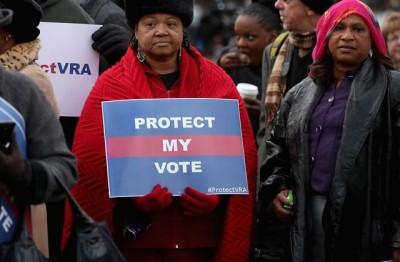
How Complacency, Complicity of Black Leadership Led to Supreme Court Evisceration of the Voting Rights Act. ~~ Bruce Dixon

 https://www.globalresearch.ca/how-complacency-complicity-of-black-misleadership-class-led-to-supreme-court-evisceration-of-the-voting-rights-act/5340655

~~ posted for dmorista with introduction by dmorista ~~

Introduction by dmorista

Introduction: I just noticed this fine article, written over 8 years ago for the Black Agenda Report, that speaks to the reality of U.S. electoral politics; and the never ending machinations of the right to maintain control of as much of the governmental apparatus as possible and to implement their agenda. As the article pointed out that agenda, (as embodied in the positions of the extreme right wingers that the Republicans managed to install on the Supreme Court in that period included then and still includes); “... Alito and Roberts were committed right wing extremists, and associated with the Federalist Society, a fraternity of lawyers founded in 1982 dedicated to repealing social security, the New Deal, antitrust law, the FDA, consumer protections and civil rights legislation of all sorts, basically (all the) civilized and civilizing reform passed in the 20th century.” (Emphasis added).

One of the main themes of the article is that there was a window of time, perhaps a decade or even a decade and a half, when the “right to vote” could very likely have been pushed over the high barriers to become a Constitutioinal Amendment. But the “liberal establishment”, notably including what the Black Agenda Report calls the Black Misleadership Class (who should have been in the forefront of such an effort) did not act decisively. That moment passed and with the increasingly unfavorable demographic trends there is no way that such an effort would be tolerated now by the right-wing Capitalist Leaders and their political lackeys. We see an avalanche of anti-voting rights legislation in State Legislatures and only a tepid response in the U.S. Congress to those about 400 proposed laws and as of June 30th 17 States had passed legislation that enacted 28 State Laws that implement various types of “Voter Suppression” measures. But long before the latest round of voter suppression legislation and other machinations began “modern” voter suppression operations were well underway.

Dixon also points out that:

I worked with Barack Obama in a 1992 Project Vote Illinois registration drive that signed up 130,000 new voters and flogged them out to the polls. President Clinton signed a Motor Voter registration law to make voter registration easier in the brief period he had a congressional majority, but dozens of state governments dominated by Republicans including northern states like Illinois refused to implement it. By the late 1990s states like Florida were deploying legal barriers to the conduct of similar registration drives, such as levying huge fines on volunteer registrars for clerical errors and making mistakes on registration forms felonies. A decade later, the kinds of successful voter registration drives we conducted in Illinois in the 80s and 90s were legally impossible in much of the United States, thanks to nearly identical legislation introduced in state after state. A coordinated assault on voting rights was clearly underway. Alarm bells should have been ringing from one end of the black political class to the other, but the black political class was too lazy to hear them.” (Emphasis added)

But despite these efforts at voter suppresion, registration and mobilization to vote operations changed the results in two arch-conservative states, Arizona and Georgia. The razor thin margin in the Senate, that has made at least made it possible to pass some progressive legislation disguised as budget reconciliation bills was made possible by the voter registration and mobilization projects in those two states. Brad Raffensperger, thrown up as the great and ethical Secretary of State for Georgia, had approved the purging of around 200,000 Democratic leaning voters; that number proved to be insufficient and Biden, Warnock, and Ossof all won with narrow margins. What Raffensperger actually did was to stand solid against changing the votes after the election, a criminal offense he had absolutely no intention of committing to help Trump and the two Republican Senatorial candidates. Neither the Black Agenda Report, nor I, are tricked into believing that the Democrats will “save us”. But it is still always better to not allow the illusion of majority support for extreme reactionaries and outright fascists to be projected by election victories for people like Donald Trump.

Election results will not save us, but electing actually honest and forthright people, in combination with massive public pressure, can bring on some of the sorts of changes we desperately need here. Well meaning organizations like the ACLU and Stacey Abrams voter registration and mobilization operations can go to the courts, but the lower courts are now 1/3 stuffed with Trump Federalist Society cretins and the Supreme Court has a 6 – 3 reactionary majority. There will be no relief from the legal system. But the situation is not hopeless. The reaction of the younger part of the U.S. population has been promising. The largely White organizing around Occupy Wall Street, though defeated with ruthless police state tactics, was a favorable development. The Black Lives Matter organizing was a significant response to the ongoing police shootings of unarmed African American citizens. The response of the response of large numbers of young people, of all races and identity groups, to the George Floyd police killing was a major development. The essence of the Occupy Movement and the BLM movement cooperated and even the Corporate Controlled Media had to marvel at the fact that the crowds out protesting were composed of half or even more White Youths. This was a big deal, and the ruling class took notice. It is also worth noting that large numbers of “out of state license plates” (from Texas, Florida, California, and other states, all places with large numbers of right-wing extremists) showed up at various cities where demonstrations took place. These largely belonged to “agents' provocateurs” and left-leaning people posted several you tube videos that showed the “agents' provocateurs” destroying property and even starting fires. Those were actions the Corporate Controlled Media did everything they could to pin exclusively on those protesting police killings. This is a long-term struggle and it has been pursued by the right with a deadly and ruthless intensity. 

Did the Supreme Court kneecapping of the Voting Rights Act have to happen? Could black leadership have seen it coming and prevented it? Why didn’t they, and what can we do now?

The June 25 Supreme Court ruling tearing the guts out of the Voting Rights Act of 1965 should be a surprise to nobody. As recently as 2009, Chief Justice John Roberts telegraphed his specific intent to kneecap the Voting Rights Act by invalidating its enforcement formula.

“Things have changed in the South. Voter turnout and registration rates now approach parity. Blatantly discriminatory evasions of federal decrees are rare. And minority candidates hold office at unprecedented levels…”

Enforcement of the Voting Rights Act rested on the history of open and legal Jim Crow in the south persisting right up until the 1960s, along with the enormous disparities between black and white voter registration and turnout. In 1965 for example, only 7% of African Americans in Mississippi were registered to vote, compared to 70% of whites.

By the early 1980s, when black registration and turnout in Chicago for the first time surpassed that of whites, enabling the election of that city’s first black mayor, it might have dawned on some that the rationale for the Voting Rights Act stood on increasingly shaky ground. If and when black voter participation reached similar levels nationwide, the victory of voting rights would have to be consolidated, put beyond the reach of succeeding Congresses, judges and executives. The only way to do that is by amending the US Constitution to make the vote a constitutional right.

The argument for putting the right to vote in a constitutional amendment was best made by Frank Watson and Jesse Jackson Jr. in their 2001 book Toward a More Perfect Union. A constitutional voting rights amendment, specifying a citizen’s right to vote, they explained, would have far reaching consequences. It would require the establishment of a uniform standard of who could register and how registration takes place, along with standards for how voting machines are procured, allocated and operated, and how votes are counted. A constitutional right to vote would provide easy grounds for removing corporate money and the contributions of wealthy individuals from political campaigns, ending felony disenfranchisement, banning gerrymandering, voter caging, discriminatory voter ID laws, and a thousand other ruses and schemes employed to keep minorities and the poor away from the polls and to minimize the effect of their votes when these are cast.

The Black Political Class Looks the Other Way

Amending the US Constitution however, is hard work, not for the lazy or faint of heart. It requires a two-thirds vote in both houses of Congress and ratification by 38 state legislatures, a herculean task unthinkable without the creation of a powerful grassroots movement, the like of which black leaders no longer knew how to build. On the positive side, opponents of such an amendment would be stuck having to explain why the right to vote should NOT be a constitutional right. But the negatives won.

The black political class instead crossed its fingers, complacently pretended the partial victory of the Voting Rights Act was “settled law,” and concentrated on boosting their own and each others’ illustrious careers, and ceaselessly commemorating the victories of the sixties, since beyond those careers there was little indeed to show.

I worked with Barack Obama in a 1992 Project Vote Illinois registration drive that signed up 130,000 new voters and flogged them out to the polls. President Clinton signed a Motor Voter registration law to make voter registration easier in the brief period he had a congressional majority, but dozens of state governments dominated by Republicans including northern states like Illinois refused to implement it. By the late 1990s states like Florida were deploying legal barriers to the conduct of similar registration drives, such as levying huge fines on volunteer registrars for clerical errors and making mistakes on registration forms felonies. A decade later, the kinds of successful voter registration drives we conducted in Illinois in the 80s and 90s were legally impossible in much of the United States, thanks to nearly identical legislation introduced in state after state. A coordinated assault on voting rights was clearly underway. Alarm bells should have been ringing from one end of the black political class to the other, but the black political class was too lazy to hear them.

Senator Barack Obama on the Judiciary Committee

Barack Obama, whose first political act was the successful 1992 voter registration drive in Illinois, reached the US Senate in the 2004 election. It was the same year Florida officials repeated everything they’d done four years earlier to reduce the black vote, and the same year county officials in Ohio sent new and functional voting machines to their white suburban constituents, and old and defective ones to minority areas. Black voters had to stand in line 10 hours for a chance to vote.

A freshman senator, Barack Obama was assigned right away to the Foreign Affairs and Judiciary Committees, prestigious assignments coveted by senators of many years’ seniority. The Judiciary Committee interviews, questions, and passes or rejects all presidential nominations to the US Supreme Court. While Obama sat on that committee, the nominations of Samuel Alito for associate justice and John Roberts for chief justice were considered.

It was no secret that both Alito and Roberts were committed right wing extremists, and associated with the Federalist Society, a fraternity of lawyers founded in 1982 dedicated to repealing social security, the New Deal, antitrust law, the FDA, consumer protections and civil rights legislation of all sorts, basically civilized and civilizing reform passed in the 20th century. Though the Federalist Society does not disclose its membership, Roberts appeared in their 1997-98 leadership directory, and after his ascent to the high court, Alito has been an honored guest at more than one Federalist Society event.

As a former president of the Harvard Law Review, Senator Obama was intimately familiar with the goals and objectives of the Federalist Society. Grassroots Democratic activists besieged Senators Obama and Kerry, both on the Judiciary Committee, to vote against Alito and Roberts, if need be to lead a filibuster against them.

Obama and Kerry said just enough encouraging words to get the pressure off themselves, then repudiated the idea of a filibuster altogether. When the nominees came before the committee, they passed up the opportunity to grill them on their Federalist Society associations and what this might tell about their expected rulings from the bench on civil rights and other questions, opting to ask softball questions instead. Obama’s decision on the Senate Judiciary Committee not to fight, filibuster or meaningfully oppose the advancement of neo-segregationist Federalist Society thugs Alito and Roberts to the Supreme Court guaranteed the virtual nullification of the Voting Rights Act which has now occurred.

By the time Barack Obama got to the White House the coordinated assault on voting rights took the form of ALEC-introduced voter ID laws. The Justice Department was slow, at best, at contesting voter ID laws, and paid no attention at all to state laws that criminalized voter registration drives such as the one the president once headed in Illinois. The rest of the black political class, following their president’s lead, did the same, and the rest is tragic history.

The black political class, which was brought into existence by the voting rights act, has failed to protect its constituency, failed to protect even themselves. They possessed the moral high ground and the political initiative for a generation and squandered it through inattention and inaction.  They spent more time celebrating the victories of the sixties than consolidating them, and we will all pay the price.

We can and must blame neo-segregationist Republican thugs in black robes for doing what they do.. That’s clear, cut and dry. But a large share of the blame in this week’s kneecapping of the Voting Rights Act also belongs to our lazy and complacent black political establishment, our black misleadership class, who lacked the vision to see this coming, or the courageous leadership to avoid it, or in most cases both.

It’s not too late to begin organizing for and demanding a constitutional right to vote, along with perhaps an amendment to take the rights of citizenship away from corporations. But we can’t expect any help from traditional black leadership on that one.

Bruce A. Dixon is managing editor at Black Agenda Report, and a member of the state committee of the Georgia Green Party.

Saturday, August 7, 2021

Remembering the Battle of Blair Mountain ~~ DAVID ROVICS

 https://www.counterpunch.org/2021/08/06/remembering-the-battle-of-blair-mountain/

~~ posted for collectivist ~~ 


At the beginning of August, 1917, a multiracial group of tenant farmers and other people mostly from Oklahoma, including the infamous abolitionist John Brown’s grandson, began what they hoped would turn into an armed uprising in Washington, DC, from different parts of the country, with the aim of putting an end to the imperial, capitalist war machine.

Hard-pressed tenant farmers from all backgrounds — white, black, brown, indigenous, women, men, including prominent indigenous women organizers — were involved with this abortive effort that became known as the Green Corn Rebellion.  Less well-known than even this virtually unknown Oklahoma uprising is the fact that it was born out of a secret multiracial network known as the Working Class Union, with an estimated 35,000 members in Oklahoma alone, which had been waging a campaign of armed resistance and industrial sabotage against the landed gentry and the mine operators of the region for years.

Although most people reading this are probably people already fairly knowledgeable about historical events a lot of other people have never heard of, my guess is most of you have never heard of the Working Class Union in Oklahoma or their campaign of sabotage and armed struggle, or the fact that it was a consciously multiracial endeavor.

One hundred years ago this month, in August, 1921, in another part of the US, a multiracial uprising of union coal miners commandeered trains and cars across the state of West Virginia and emptied armories of their contents, as they marched to the town of Mingo, where a hundred of their fellow union miners were being held without charge by the corrupt authorities.

Somewhere around 15,000 miners engaged in three days and nights of crossfire with thousands of the more “well-to-do” members of West Virginia society, including every cop in the entire state and all the gun thugs the mine operators could find available to hire.  It was an explicitly multiracial uprising, led by a union movement that had for decades been explicitly antiracist, acutely aware of the ways the bosses used the racial divide in the US to keep the working class in a constant state of conflict.  So much of the labor movement of the day rejected this strategy and employed their own strategy of radical inclusion.

How thoroughly did the black miners of West Virginia feel about their part in the union movement in 1921?  Of the 15,000 or so people laying siege to Mingo at the end of August of that year, an estimated 2,000 of them were black.

This was a multiracial uprising of unprecedented scale.  During the three days that the miners were trying to liberate their comrades imprisoned in Mingo, dozens of people were killed, the total numbers never to be known.  Thousands of women of all backgrounds were actively involved with the struggle, coordinating essential logistics like food and medical care for thousands of men under arms.

Just three months earlier in Tulsa, Oklahoma, planes dropped explosives on the black community of Greenwood, razing the entire neighborhood to the ground, killing hundreds of black people from the community in a racist lynch mob consisting of thousands of members of the white community in Tulsa.  Refugees were interned and treated terribly by the authorities.  People whose lives, homes, and businesses were destroyed never saw any compensation for their losses, or even any apologies worth mentioning.  The intergenerational trauma stemming from this pogrom continues to this day.

The impact of this racist pogrom on the black people of Oklahoma and beyond is incalculable.  The impact of learning about this horrible event — one of so many similar horrors throughout the history of this settler-colonial empire we call the United States — is also hard to calculate.

This is especially true when all you know about the history of 1921 is the Tulsa Race Massacre.  Everyone should know about this massacre, in all its horrific detail.  Everyone should know about the planes dropping explosives, and the systematic destruction of the city.  Everyone should know about later efforts to hide the history, to pave over what remained of Greenwood with a highway.

But everyone should also know that the second time planes were used to drop explosives on people in the United States was in August, 1921, in West Virginia.  And these planes were from the US military, flown in from bases hundreds of miles away, to drop bombs on a multiracial uprising of union miners.

There is so much more that can be said about what led up to both the Tulsa pogrom and the multiracial uprising in West Virginia, which both happened within months of each other in 1921.  The impact of the unspeakably horrendous bloodbath known as World War 1, along with the terribly devastating global pandemic that it gave rise to, would be hard to overstate.  Massively traumatized populations are more likely to take up arms in whatever circumstance.  History demonstrates this pattern abundantly.  Which doesn’t explain either of these events, but understanding 1921 in the context of 1918 is absolutely essential.  1921 didn’t happen in a vacuum.

The main point I would venture to make here is that we cannot begin to understand the realities and complexities of the present day, to say nothing of the history of this country, if when we think of 1921 we remember the Tulsa Race Massacre, but not the Battle of Blair Mountain.

And why would we do that?  Don’t ask me.  Ask the corporate and so-called “public” media in this country.  Ask them why they ignore the biggest multiracial uprising in the history of this country.  They’ll say they’re not ignoring it — look, West Virginia Public Television did a barely-funded little documentary about that, they may say.

But barely mentioning a major historical event is more or less the same as ignoring it, in terms of the impact on the populace.  At this point, given the media coverage and the speeches of prominent politicians and so much more, the Greenwood pogrom may be said to have achieved the historical notoriety it so richly deserves.  What an extreme example of what a white supremacist, settler-colonial mentality can achieve, under the right — that is, wrong — circumstances of population-wide PTSD and widespread poverty and unemployment, on top of the centuries of racist brainwashing from the top that has characterized colonialism from the beginning of the practice.

But in the face of such a longstanding history of white supremacy and settler-colonialism, is it not worth mentioning that so much of the labor movement explicitly rejected that nonsense?  Is it not worth noting that an interracial army of union miners spontaneously organized an uprising in August, 1921, that had to be put down by federal troops?  Is it not worth mentioning that none of the organizers of this multiracial uprising could be convicted by a jury anywhere in the state of West Virginia afterwards?

What do you think of when you think of West Virginia?  Let me guess.  Racist white hillbillies.

There is another America.  You will not hear about it on television.  PBS — and all the corporate networks — almost completely ignore labor history.  Multiracial uprisings are completely ignored, as if they never happened.  If we don’t learn about this side of our history, and only learn about the lynchings, nothing good will come of this “education.”

I have never heard Al Sharpton give a speech where he doesn’t mention the martyrs, Goodman, Chaney, and Schwerner.  Reverend Sharpton is not pandering to anyone by mentioning these three names like a mantra in every speech.  He is educating the people, whoever is listening, about the multiracial history of resistance to class- and race-based oppression in this country.

Just as no one can understand the relevance of the Civil Rights movement without knowing about the multiracial Freedom Riders and other such efforts, the idea that so much of a society can know about the racist pogrom in Oklahoma in 1921, but not about the multiracial uprising in West Virginia three months later, tells you everything you need to know about what’s wrong with how education, and the media, function in this capitalist society.

For whatever it’s worth, in my role as a topical songwriter, I have written songs about all of the events I’ve mentioned here — the Green Corn Rebellion, the Tulsa Race Massacre, and the Battle of Blair Mountain.  I did that because I think it’s so important that all of these things be remembered.  I shudder at the thought of only knowing about one of these events without knowing about the others.  What must that do to the spirits of so many people, led to believe that our history consists of nothing but racial division and subjugation.

There is another America.  Remember it.  Whether Jesus ever lived or died, I don’t know.  But those miners died for you.  You should at least know who they were.  And then let’s all follow in their footsteps.  Long live the multiracial uprising in the hills of Appalachia in 1921.  Long live the Battle of Blair Mountain.

  https://youtube.com/playlist?list=PLB2jxSGvg_-czWhkYXBFvYe14JnFDit4h

Sunday, January 3, 2021

More Important than Gold, Water Should Not Be Traded on Wall Street ~~Avexnim Cojti


Two articles on the trading of water...

 https://www.culturalsurvival.org/news/more-important-gold-water-should-not-be-traded-wall-street


On December 8, 2020, several media sources reported that fresh water started to be traded on Wall Street as a commodity such as gold and wheat. This comes as water scarcity is increasing in California and many parts of the world and as we near a global water crisis. A water crisis is worrisome enough, yet more alarming is the fact that our Mother Water will be controlled by a privileged group of people who will determine its value to the world.  


As Indigenous Peoples of Abya Yala (the Americas), we have seen how our territories were turned into private property for the benefit of settlers and their governments. Although we might have lost our livelihoods in certain cases, we are resilient and we continue asserting our rights to collective lands and land protection. This time, we cannot stand by as Mother Water becomes one more commodity on the capitalist market. It is not right. New ZealandEcuador, and Bolivia in recent years have passed groundbreaking legislation giving personhood status to bodies of water as well as securing additional protection for nature. In India, there have been legal attempts to consider the Ganges and Yamuna Rivers as legal persons in an effort to combat pollution. In 2016, the Colombia Constitutional Court found that the Atrato River basin possesses rights to "protection, conservation, maintenance, and restoration." 
 

We refer to water as our Mother Water in the same way we refer to Mother Earth. They are both mothers who nurture us and all living beings at no cost. We honor water in our ceremonies and practices as it is a sacred element of our livelihoods. In the community of the Maya of Chuwila in Guatemala, people greet the water spirit and we thank it for being with us at the first touch of water in the morning every day. Offerings of flowers are done to water when it is the first time it comes to households. Mother Water needs to be protected and cared for not only by Indigenous people but by all people. We are called to protect all life in regions where water is most scarce. 
 

With climate change, overpopulation, dysfunctional consumerism, unsustainable agriculture, and multiple types of land extractivisms around the world, the scarcity of freshwater is escalating, as is the number of deaths due to illnesses caused by contaminated water sources and lack of access to water. Conflicts within and between communities are arising because of water scarcity and unequal access. One example is the depletion of lake Chad in Nigeria due to climate change that has led to conflict, violence, and the displacement and forced migration of local people. The global community cannot avert our eyes to these facts.
 

Water on the Wall Street market will benefit only those with large capital who can afford to pay the price of water. It will push people and families to pay for it or die. This will be seen especially in regions where water is already in crisis like those communities around lake Chad.  Pedro Arrojo-Agudo, Special Rapporteur on human rights to safe drinking water and sanitation rightly said, “In this context, the risk is that the large agricultural and industrial players and large-scale utilities are the ones who can buy, marginalizing and impacting the vulnerable sector of the economy such as small-scale farmers.” By affecting the price and availability of water, we are also affecting the food security of the world and the displacement of millions of people in the short future.
 

Water as a commodity on the market can also lead to its privatization and price gouging that would benefit only the most economically strong. As a consequence, people desperate to survive will fight for water rights. One outstanding example in our recent history was the water war in Bolivia in 2000. A private consortium, dominated by the Bechtel Corporation of San Francisco, took over Cochabamba's water system and raised water rates after the government of Bolivia sold this public service to them. After massive protests, injuries, and deaths, the people of Cochabamba recovered water as a public good and Bechtel Corporation sued the government of Bolivia for damages. 
 

Other examples in the struggle for water rights and water defense are the cases of the Maya Q’eqchi’ Peoples in Guatemala and Sunuwar communities in Nepal. The Maya Q’eqchi’ have fought for the protection and collective use of the Cahabón and Oxec Rivers in the northwest part of the country. They opposed private hydroelectric Oxec projects that were established without the Free, Prior and Informed Consent of Indigenous communities. As a result of the conflict, Bernardo Caal Xol has been a prisoner of conscience since 2018. Xol is one of many land and water defenders who has spoken out on behalf of Indigenous communities and opposed the projects. He was criminalized by Energy Resources Capital Corporation who acted with the support of the Guatemalan government. On the other side of the globe, in Nepal, Sunuwar communities are actively fighting hydro dams which are being built without their consent on the Likhu and Khimti Rivers. These struggles demonstrate the will of the people to fight for water rights and to protect sacred waters from development and pollution that are not unique are present in most countries. 
 

In July of 2010, the General Assembly of the United Nations, in Resolution 64/292, explicitly recognized the human right to water and sanitation and acknowledged that clean drinking water and sanitation are essential to the realization of all human rights. Access to fresh water and sanitation as a human right should not be linked to market prices. Access to fresh water and sanitation is to be respected, protected, and fulfilled as a human right by all levels of government, businesses, and civil society. Water conservation needs to be emphasized now in the agroindustry more than ever before. We can live with less meat, less soy, less almonds, less wine but we cannot live with less water.  
 

Water is essential for life, access to fresh water is a human right, and most importantly, water is sacred. Water is life.

================

Another article on trading of water in the futures market:

https://www.bloomberg.com/news/articles/2020-12-06/water-futures-to-start-trading-amid-growing-fears-of-scarcity

California Water Futures Begin Trading Amid Fear of Scarcity

Saturday, December 12, 2020

Renters Are Organizing To Fight Evictions, Just Like They Did in the 1930s ~~ Zacharias Szumer

https://jacobinmag.com/2020/12/australian-renters-evictions-organizing-1930s-covid

In the wake of the pandemic, Australian renters are once again facing the threat of mass evictions. The militant renters’ struggles of the Great Depression are an excellent model for the movement that’s taking shape today.

In June 1931, a Sydney hospital admitted a seven-year-old boy with a severely injured toe. When asked how he’d acquired the injury, the boy told doctors that another child had thrown a brick at him during a game. “We was playin’ evictions and I was a policeman,” he said, pointing to another small boy, “and he was a communist.”

The boys’ game was inspired by a real battle they had witnessed ten days earlier. It was one of many anti-eviction actions organized by the Unemployed Workers Movement (UWM) across Sydney to resist a wave of homelessness triggered by the Great Depression.

Unemployed and on The Street

During the early 1930s, in working-class areas of Sydney and Melbourne, unemployment peaked at more than 30 percent. Because welfare recipients were paid in goods or coupons, rather than money, and few owned homes of their own, the result was a wave of evictions. In poor suburbs, it was common to see bailiffs (today called sheriff’s officers) dumping furniture — and families — onto the road.

The confrontation that inspired the children’s game occurred on June 19, 1931, in Newtown, Sydney. As Iain McIntyre describes in his book Lock Out the Landlords! Australian Eviction Resistance 1929–1936, members of the UWM had barricaded themselves inside a house with sandbags and barbed wire to defend a family facing eviction.

When police attempted to force their way into the house, UWM members pelted them with bricks and stones. Eventually, the police broke through and violently ejected the UWM members. One man was shot and two others were hospitalized with fractured skulls. A crowd of locals — reportedly numbering in the thousands — heckled police as they attempted to leave the scene.


During the first years of the Great Depression, the UWM coordinated many actions like these. They set up local anti-eviction committees, approached renters at risk of eviction, and provided food, childcare, and help with moving. If the tenant wished, the UWM would organize an eviction defense. In the lead-up, the UWM would usually visit the landlord or real estate agent to warn them that an attempted eviction would be resisted. If landlords tried anyway, the UWM would chalk messages on footpaths or send bicycle riders around neighborhoods banging on tin cans, to stir up a crowd.The UWM wasn’t only active in Sydney. In July 1930, in Brunswick, Melbourne, hundreds of unemployed split off from a protest march to prevent an eviction. According to firsthand accounts, a bailiff was already in the property marking furniture to be seized and sold when protesters flooded the house, pushing the bailiff onto a couch while “an enterprising gentleman tipped a dish of water over him.” The bailiff was then “bundled unceremoniously down the passage and thrown out of the house where they were seized upon by a crowd numbering several hundred.”

The UWM’s tactics were so successful that they won every single eviction case they took on during the first half of 1931.

The COVID-19 Rental Crisis

Just like the Great Depression, the COVID-19 crisis has hit tenants hard. A recent survey of fifteen thousand renters carried out by the Australian Housing and Urban Research Institute (AHURI) found that the vast majority of respondents reported that COVID-19 had adversely affected their employment, living environment, and ability to pay rent. Seven hundred and fifty respondents reported having received an eviction notice since the start of the pandemic.

Only one in three respondents had requested a rent reduction or deferral, or were planning to ask for one. Forty-two percent of those who applied were granted a rent reduction while another 30 percent had their request declined outright. Another 17 percent entered into a rent-deferral arrangement, effectively kicking mounting arrears down the road. When some tenants asked for a rent reduction, agents sent financial hardship forms, demanding personal information and often misleading tenants about their legal rights.

An earlier report from Tenants Victoria found that rent reductions were “hard-won” and generally lasted three months or less. It also found that real estate agents refused more than a third of requests, justifying their rejection with “no reason given.”

According to AHURI, despite near-universal hardship, the majority of renters were reluctant to ask for a rent reduction. This was mainly because tenants anticipated refusal, fearing that the request would jeopardize needed repairs or result in a tarnished rental record. Some real estate agents even sent tenants emails and letters telling them not to bother asking for any relief, and warning them that they would be penalized for falling behind on payments.

After state governments announced an eviction moratorium, the Tenants’ Union of New South Wales’ website received a year’s worth of traffic in a few days. Tenants Victoria experienced a 400 percent increase in people seeking help, many of whom were renters issued with notices to vacate after advising their landlord they had lost their job.

The year 2020 has highlighted renters’ relative legal powerlessness. Unlike banks and other financial institutions, landlords are not required to provide flexibility to a tenant facing hardship — although civil tribunals have some power to force their hand, pending a lengthy process. Indeed, Australia is one of the few developed countries that allows “no grounds” evictions, which some landlords have used as a loophole to boot tenants during the moratorium. Notices to vacate are still reportedly being issued, with the intention of evicting tenants the day after the moratorium is lifted.

Governments could have legally mandated rent reductions across the board, as some housing experts urged. Or they could have mandated rent reductions proportionate to loss of income, which were granted to commercial tenants. Instead, federal and state leaders simply asked landlords, real estate agents, and residential tenants to negotiate “in good faith,” despite the systemic insecurities and imbalances in the private rental market

When the Moratorium Ends

The Renters and Housing Union (RAHU) was first conceived of during a national rent strike staged in 2020, which attracted seventeen thousand pledges to withhold rent and mortgage payments in its first month. Following a local organizing drive across Melbourne, RAHU was formally established in May.

Unlike Tenants Victoria — a government-funded body that provides legal advice to tenants — RAHU is a self-representing body of renters. They’ve already chalked up a few wins, in some cases helping tenants secure the waiving of debts as high as $12,000 by their landlords. They have also helped to block evictions through the Victorian Civil and Administrative Tribunal.

Yet the fiercest battle for RAHU may come in March next year, when the final cuts to the JobSeeker and JobKeeper income subsidies hit, and when most eviction moratoriums expire. It’s a convergence that may set off a wave of evictions — especially if landlords and agencies keep rents high and enforce the payment of deferred rent.

RAHU secretary Eirene Tsolidis-Noyce says that if it comes down to it, RAHU is willing to resort to the type of tactics the UWM employed in the 1930s:

We live in a different society to the 30s, but fundamentally we still need a strong union. We need all renters to be organized collectively and join the union, to know their local fellow members, and to network together to protect each other against eviction . . . and if it requires a picket, that’s what it’ll take.

Fortunately, we don’t need to search as far back as the 1930s for proof that direct action is an effective anti-eviction strategy. In early 2018, Brisbane Greens councilor Jonathan Sri organized a picket that prevented the eviction of a single mother and her five children.

More recently, Sydney’s Housing Defence Coalition mobilized at the house of a recently unemployed New Zealand citizen and blocked her imminent, and potentially illegal, eviction. They also won rent suspensions and reductions at Sydney University Village and a commitment from the University of Sydney that no students would be evicted from university housing.

Will the Government Prevent an Eviction Crisis?

As researcher Vanessa Whittington notes, the eviction crisis of the early 1930s led to a few pieces of progressive — albeit short-lived — legislation. In NSW, the 1931 Reduction of Rent Act mandated a statewide 22.5 percent reduction in all rents. The 1931 Ejectments Postponement Act prohibited eviction without a court order.

However, following complaints from landlords and their representatives, the Ejectments Postponement Act was repealed a year later, after the Lang Labor government was sacked. The incoming Conservative government also weakened the Rent Reduction Act in favor of landlords. It remains to be seen whether state and federal governments today will have the courage to side with tenants against landlords and real estate agents — but the precedents are not encouraging.

This is why RAHU has issued ten demands including a twelve-month eviction ban, the waiving of all rental debts accrued during the pandemic, rent-reduction agreements set at below 30 percent of tenants’ income, and the application of penalties for landlords or agencies who refuse to negotiate with renters in good faith or breach renters’ rights. The demands of the Victorian Federation of Community Legal Centres are slightly less radical, but follow similar lines.


Nevertheless, RAHU has begun to flex its muscle. On November 30, the young union organized a peaceful protest against the potential eviction of forty people from an inner-city Melbourne hotel, which has been used as emergency accommodation during the pandemic.If governments don’t step up, tenants will have no option but to fight back. Organizing this type of resistance will be difficult in communities that have lost much of the social cohesion working-class neighborhoods had in the 1930s. Homeownership has also significantly increased since then, making renters a smaller and less powerful social force.

RAHU says that most of those forced to leave emergency accommodation this week will have no alternative but to sleep rough, contradicting recent statements by the state government that anyone eligible for social housing would “remain in hotel accommodation until a supported home is leased or purchased specifically for them.” RAHU also warns that many have already been evicted or are at imminent risk of eviction, given that state government funding for emergency pandemic housing has now dried up.

As Tsolidis-Noyce says:

Due to insecure work, neoliberal policy and a global pandemic that has sent us into a decades-long depression, the stakes are higher than the 30s, but the power imbalance still remains.

Yet early indications show that RAHU is swimming with the tide. Just as in the Great Depression, community solidarity can force the government and landlords to back down — and save renters from eviction and homelessness.

================

Also, an article on the unfolding eviction crisis that the US will face earlier in the new year

https://blackagendareport.com/how-prevent-40-million-people-being-evicted