https://www.workers.org/2021/09/58980/
~~ posted for collectivist ~~
https://www.workers.org/2021/09/58980/
~~ posted for collectivist ~~
https://mronline.org/2021/09/09/we-are-scientists-calling-for-a-climate-revolution
~~ posted for collectivist ~~

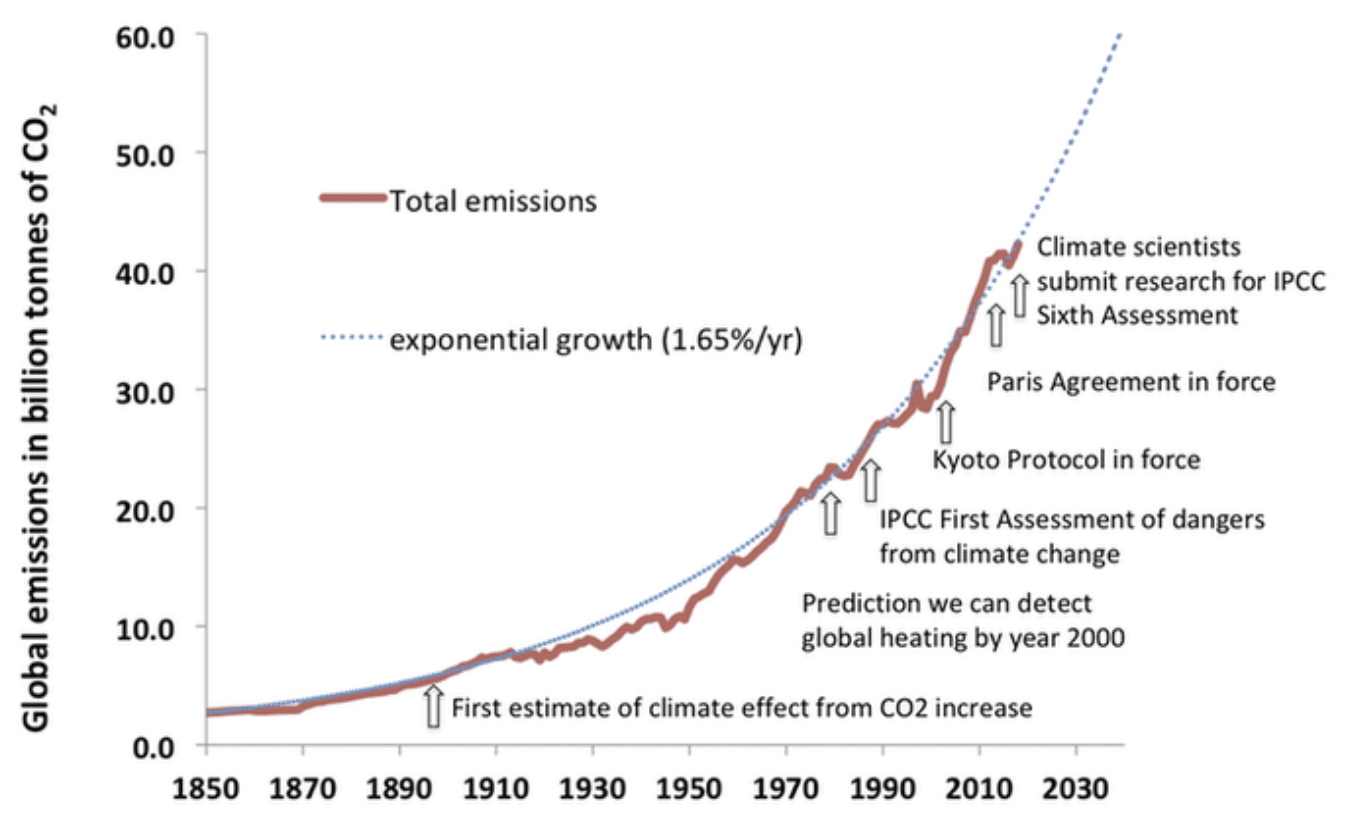
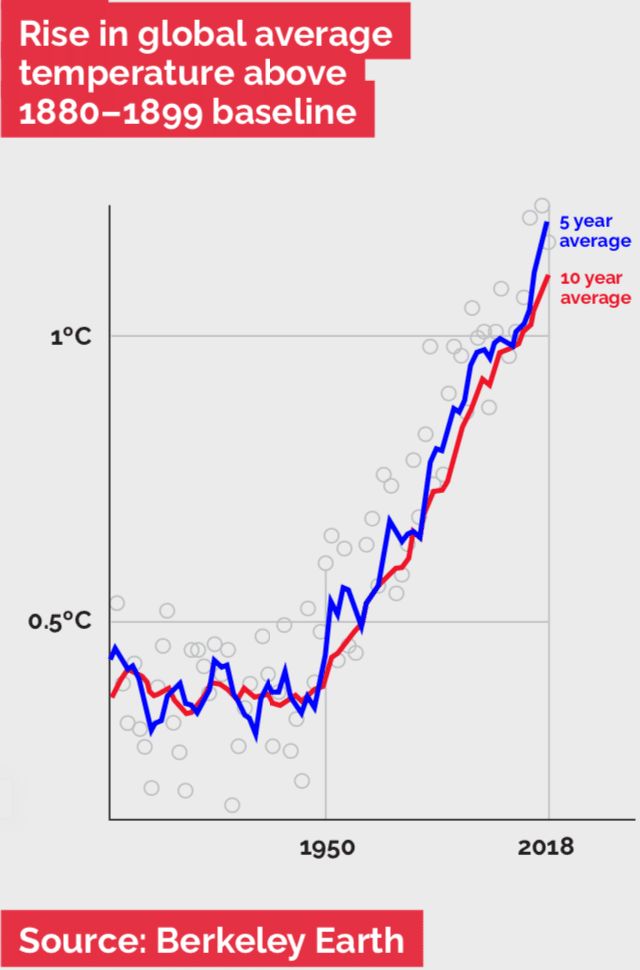 The climate and ecological crises threaten every aspect of human civilisation. Despite decades of warnings from scientists and others, greenhouse gas emissions and temperatures continue to soar. A domino effect of climate tipping points threatens to push the Earth into a state that is alien and inhospitable to human civilisation.
Still, mega-corporations ransack the natural world with support from their servants in public office. Governments who stray from protecting corporate interest in favour of human need are attacked and delegitimised in the billionaire press, face the prospect of international capital flight, and of political or military coups. This corruption of democracy sits at the heart of climate inaction.
Billions are threatened with starvation, displacement, drought and inundation within the next few decades. Scientists know business as usual cannot continue: it’s time to put our bodies where our mouths are and resist, for truth and life.
Human industrial activity has impacted the world as severely as the asteroid which wiped out the dinosaurs. 70% of the mammals, fish, birds, plants, amphibians, reptiles, and around half of the insects annihilated. Greenhouse gas emissions and temperatures soaring faster than at perhaps any point in Earth’s history. Climate tipping points being crossed – like the melting of the Arctic – accelerating heating and stripping humanity of meaningful control over our future.
 We are heading toward a world at least 4°C hotter this century. The effects will be catastrophic. Even 2°C – which we are set to burn through by 2050 – means billions without enough food and water, hundreds of millions of refugees, historic natural disasters virtually every year, war, disease. Without political and economic revolution we face a nightmare from which we cannot wake. Scientists know this, and we are starting to resist.
https://www.workers.org/2021/09/58808/
~~ posted for collectivist ~~
There is no doubt that the climate catastrophe threatens the future of life on the planet. A massive mobilization of the working class will be needed to combat this threat.
But, as Hurricane Ida and the associated flooding revealed, this is not just a threat to future generations — climate change is already a killer. Not only have dozens of people drowned in the hurricane’s wake, but hundreds are dead from the heat wave in the Northwest.
Structural failures under capitalism are compounding the climate catastrophe for the working class. As the Sept. 3 New York Times admitted, “Disasters cascading across the country this summer have exposed a harsh reality: The United States is not ready for the extreme weather that is now becoming frequent as a result of a warming planet.”
We see a clear lack of preparedness in the richest country in the world. There is no regard for poor, oppressed and working-class people, who get no evacuation assistance in a life-threatening situation and are basically left to their own devices.
The trillion-dollar infrastructure bill passed by Congress “includes $150 billion for clean energy and climate change protections. Tens of billions would also be utilized to fight extreme weather like drought, wildfire, flooding and erosion.” (PBS, Aug. 5)
Tens of billions is woefully inadequate.
Consider, on the 16th anniversary of Hurricane Katrina, how Louisiana and Mississippi were devastated, their governments still not fully prepared for another major weather event. One million people remain without power and with little gas and water during the worst heat of the summer.

Floods devastated New York City. Here, Harlem subway station.
Throughout New York’s five boroughs and parts of New Jersey and Pennsylvania, people were trapped, some dying in flooded basement apartments, others unable to commute to work or do essential tasks due to collapsed roadways and bridges, totaled vehicles and flooded subways and expressways.
Lack of money isn’t the problem. There is incredible wealth concentrated in New York City and the surrounding areas, yet workers who produce that wealth were helpless in the rush of floodwaters. If the financial fortunes in Wall St. alone were taxed at the same rate as an average worker, funds could be used to prevent many of these tragic deaths.
Manhattan is an island of asphalt, with too little exposed soil to absorb floodwaters. The land was stolen from Indigenous people and then built up to serve the interests of finance capital — people and the environment be damned. As with every major urban center, money in the city budget — needed for infrastructure repairs and improvements — instead goes to city bondholders. Big Wall Street banks extort bloated interest payments from New York and other cash-strapped cities.
Time for ‘system change, not climate change’
“The pattern of damage reflects the relationship between climate exposure and racial inequality; impacts were more apparent in low-income communities of color, which, because of historic inequalities, are more prone to flooding, receive less maintenance from city services and frequently experience lax housing code enforcement,” the New York Times acknowledges.
Environmental terrorism and environmental racism in the U.S. are part of the legacy of capitalist development.
And the situation is far worse in the colonized Global South.
But socialist Cuba, with far fewer resources than the U.S., has created a model for hurricane evacuation that looks out for every human being — and even pets and livestock. The whole population is mobilized, and no one is left to fend for themselves.
A program of working-class demands is necessary to meet the twin crises of global warming and faulty or woefully inadequate infrastructure: Money for flood protection and relief, not for war! Money for cooling centers in a heat wave, not for tax breaks to the rich! Money for green jobs, not interest to the banks! People and the planet before profits; make the fossil fuel industry pay to clean up the messes it made!
This is just a start. It will take a monumental struggle to win climate justice.
But rebellion is inevitable. Ida is the storm of wind and rain before the coming storm of protest. The challenge is to carry future waves of resistance through to their essential conclusion: a workers’ revolution for the abolition of capitalist wage-slavery.
Karl Marx and Friedrich Engels, writing in 1848, said the workers “have a world to win.”

Photograph Source: Brian Snelson – CC BY 2.0
So much we are supposed to forget or not know and/or care about, so little we are supposed to remember.
“We must never forget” 9/11, when “America was attacked” (when, as cannot be said without sounding “controversial,” the United States Middle East policy blew back on the nation’s financial and political capitals).
You must always remember that atrocity, good Americans: sear it in your minds forever. Never forget. Never stop caring. Never stop honoring the 9/11 victims and the “brave soldiers” who fought, died, and killed halfway across the world – causing massively more casualties than they suffered – in its wake. Never stop mourning (and avenging) that holy day of inherently “good” and “exceptional” America’s unjust martyrdom: 9/11/2001.
But we are supposed to always forget or better yet not know and/or care about:
+ Two and a half centuries of North American Black chattel slavery, the foundation for the United States’ rise to capitalist economic power in the world system.
+ The murderous Middle Passage, wherein millions of chained Black humans died en route to the Americas from Africa.
+ The white owner and overseer rape of untold masses of Black slave females and the constant breaking of Black families.
+ A century of Jim Crow terror, replete with the violent imposition of Black slavery by a new name, the disenfranchisement of Black Americans, the night rides of the neo-Confederate Ku Klux Klan, dozens of race pogroms (including the savage white leveling of much of Black Tulsa in May of 1921), the late 19th and 20th Century explosion of Sundown Towns (where “no negro better show his face after dark”) all over the US (northern states included), and thousands of barbarian white power lynchings of Black men (often attended by cheering white crowds) across the former slave states.
+ Mass northern Black ghettoization, enforced by restrictive covenants, bombings, police terrorism, white gang violence (look up the 1919 Chicago race riot), redlining, and more.
+ The slaughter of dozens of Black inmates at New York’s Attica state prison, ordered by New York’s racist governor (to the great delight of America’s racist president Richard Nixon) on September 13, 1971.
+ The ongoing racist campaigns of mass arrest, mass incarceration, felony branding, criminal supervision, and police murder, justified in the name of the racist “War on Drugs.”
+ The genocidal removal and murder of Native Americans, re-enacted over and over again with such horrific, blood-curdling incidents as the Mystic River Massacre the Sullivan Expedition (ordered by the nation’s first president, who the Iroquois named “Town Destroyer”), the Trail of Tears (blood-drenched Indian killer and slaver Andrew Jackson’s savage long march ethnic cleansing of the Cherokee Nation), the so-called “Battle of Bad Axe” (when US troops thanked God for helping them dispatch “devils” as they butchered Sauk women and children in western Wisconsin), the Sand Creek Massacre, and the Wounded Knee Massacre (to mention just a handful of the relevant white American slaughters of the country’s original inhabitants).
+ The murder of the Molly Maguires, the so-called Battle of the Viaduct (when American soldiers brought in from the Indian-killing Dakota frontier slaughtered white proletarian “savages” in Chicago during the Great Labor Upheaval of 1877), the rigged trial and sadistic, short-rope hanging of the Haymarket Martyrs, the Ludlow Massacre, the Bisbee deportation, and the Memorial Day Massacre, to mention some of the bloodier worker suppression episodes from America’s incredibly gory labor history.
+ The police state executions of Malcolm X, Martin Luther King, and Fred Hampton, the Jackson State killings, the Attica prison slaughter, the murder of MOVE, and the murderous federal police state war on the American Indian Movement, the Black Panthers, and the New Left.
+ The bloody racist and openly imperialist theft of the current Southwestern United States from Mexico in the so-called Mexican American War.
+ The mass-murderous and racist US occupation and pacification of the Philippines, where US troops, many of them veteran “Indian-fighters,” slaughtered Filipino “niggers” and “Apaches” en masse.
+ The bloody US the seizure and neo-colonization of Cuba and Puerto Rico.
+ The recurrent bloody US invasions and occupations of Central America.
+ The unspeakable and unnecessary crimes of Hiroshima and (even worse) Nagasaki
+ The genocidal US bombing of Korean cities in the early 1950s.
+ The No Gun Ri Massacre: the murder of at least 400 Korean civilians by the US military in July of 1950.
+ The monumental US Superpower crucifixion of mostly peasant-based Southeast Asia, leading to the death of 2 to 5 million people between 1962 and 1975 and including dozens of My Lai massacres, Operation Tiger Force (a rolling US campaign of rape, torture, and murder in Vietnam’s Central Highlands between November 1965 and November 1967); and the savage carpet bombing of Laos and Cambodia.
+ The US funding and equipping of Third Word fascist death squad regimes (including fascist governments in Brazil, Chile, Bolivia, and Argentina) and right-wing terrorist forces in post-WWII Latin and Central America.
+ The US greenlighting of Indonesia’s genocidal invasion of East Timor in 1975.
+ US support of South African apartheid and other Third World fascist regimes (e.g., Indonesia’s mass-murderous Suharto government) across the world during the Cold War.
+ The US-backed Latin American 9/11 (the Washington-supported coup in Chile on that day in 1973).
+ The ferocious “Highway of Death,” when US warplanes risked mid-air collisions in their rush to mercilessly slaughter thousands of surrendered Iraq troops retreating from Kuwait in 1991.
+ US economic sanctions that killed at least half a million Iraqi children (“a price worth paying,” according to Bill Clinton’s Secretary of State Madeline Albright) by the mid-1990s.
+ US funding and equipping of extremist Islamic-fundamentalist forces (for Cold War, anti-Soviet purposes) in Afghanistan starting in the late 1970s and 1980s, creating the very forces that would “attack America” in 2001.
+ US support and cover for apartheid Israel’s ongoing Zionist-fascist murder and torture of the Palestinian people.
+ US support for the savage absolutist be-header regime in Saudi Arabia (possibly the most reactionary government on Earth), the vicious monarchy that has murdered Yemen with American weapons.
+ The criminal and racist US regime change invasion and occupation of Afghanistan, the cause of certainly more than 100,000 deaths there. The invasion was a lawless and unjust response to 9/11, a terrorist attack conducted mainly by Saudis and planned in Germany. It followed Washington’s absurd refusal of the Afghan Taliban government’s offer to hand Osama bin Laden over to the US.
+ The astonishingly evil and Orwellian use of 9/11 and the myths of Iraqi weapons of mass destruction and the equally big lies of democratic intentions and a supposed alliance between Saddam Hussein and al Qaeda to “justify” the racist, monumentally mass-murderous, and petro-imperialist US regime change invasion, occupation, and breaking of Iraq – the cause of well more than a million deaths there. Highlights of that noble invasion and occupation include the sadistic US siege of Fallujah, an operation that included the use of radioactive ordnance that generated a local epidemic of childhood leukemia.
+ The central US airpower contribution to the regime change destruction of Libya, a bloody disaster both within that country and across North Africa in 2011 (another of so many “thanks, Obama” moments).
+ The drone murder (involving direct presidential target selection in Obama’s sick case) of thousands and the drone terrorization of the Muslim world in the ironic name of “the global war on terror.”
+ The ramping up and legitimization of imperial torture (Guantanamo, Abu Ghraib, and numerous “black sites” set up by the US in collaboration with “foreign partners”) also in the ironic name of anti-terrorism.
Forget, forget, forget, forget, forget, remember, forget, forget, forget. Better yet never know or care enough about our crimes to forget in the first place.
Watching the US media’s coverage of America’s recent final military retreat from Afghanistan, one would – if they didn’t know any better – think that the Taliban was the only bad actor in Afghanistan, that the US had never helped create the Taliban, and that the US had never murdered masses of ordinary Afghans during an unjustified two-decade imperial occupation. Like in the Afghan village of Bola Boluk in May of 2009, when Obama and his Secretary of State Hillary Clinton absurdly blamed “Taliban grenades” for a US bombing attack that killed more than 130 civilians, including small children whose body parts weeping villagers collected in wheelbarrows.
I could go on and on with lists and names of American crimes and atrocities within and beyond North America. They are largely unknown or forgotten in the heart of the imperial beast because their very disproportionately non-white victims are considered without sufficient merit and significance here. That is a great accomplishment of the nation’s dominant ideological institutions, whose role is to “manufacture consent” to American Empire and Inequality at home and abroad. Those on the wrong side of US forts, guns, bombsites, drone screens, and policies are “unworthy victims,” unlike the mostly white Americans who died on 9/11 and unlike the US troops who perish in the nation’s supposed noble military actions abroad. As John Pilger has written, the logic of this forgetting, ignorance, indifference, and selective memory is simple “a crime is only a crime if the perpetrators are ‘them’ and not ‘us.’” It is for this reason, as Harold Pinter noted in 2005, that Soviet crimes were well known in West while Washington’s epic imperial transgressions were just “superficially recorded, let alone documented, let alone acknowledged. America had killed and was killing millions but in much of the world,” Pinter observed, “you wouldn’t know it. It never happened…Even while it was happening it never happened. It didn’t matter, it was of no interest.”
As Noam Chomsky likes to point out, it’s not really a “double standard,” it’s an imperial and nationalist “single standard”: “we” are inherently “good”, and “they” are bad. By definition.
Hence it is, for example, that Chomsky, perhaps the world’s leading public intellectual in the late 20th and early 21st Century, has lived in the United States but has long been essentially banned from its leading media outlets. He has always committed an unpardonable imperial sin: recording, documenting, acknowledging, and criticizing America’s crimes at home along with its intimately related wrongdoings at home – and the domestic institutional and social structural oppression system that has created those overlapping transgressions against democracy and the common good.
Readers interested in more documentation and details on the officially forgotten and disappeared crimes I listed above are welcome to read these two previously published essays of mine:
Paul Street, “The World Will Not Mourn the Decline of US Hegemony,” Common Dreams, February 22, 2018.
Paul Street, “Uncle Sam Was Born Lethal,” Counterpunch, August 16, 2019.
For what it’s worth, since I had already long studied US foreign policy both through primary sources and in the magisterial writings of such incisive and brilliant scholars as William Appleman Williams, Walter LaFeber, Thomas McCormick, Chomsky, Chalmers Johnson, and Gabriel Kolko, I felt little basic surprise on 9/11/2001. While I knew nothing about the despicable tactic of hijacking passenger jets and flying them into buildings (I was expecting something along the lines of a “suitcase” nuclear assault), I had long been thinking that a major Islamo-fundamentalist “blowback” attack on the United States’ financial and/or political capital(s) was overdue and imminent. When the grisly, visually spectacular attack came, I said to myself and others “here’s the big imperial blowback Uncle Sam will use as its ‘New Pearl Harbor’ excuse to murder untold masses of Arab and Muslim people and try to boost fading US hegemony by putting its boot down harder on the Middle Eastern oil spigot.” That’s exactly what happened, easy to predict for those “in the know” – that is, for those, willing to step outside doctrinal parameters and nationalist norms to examine actual history.
https://climateandcapitalism.com/2021/06/17/the-double-deformation/
~~ posted for collectivist ~~
Economic exploitation is only one aspect of capitalism. The crisis of humanity and the crisis of the earth system are inseparable
Michael A. Lebowitz is professor emeritus of economics at Simon Fraser University in Vancouver, Canada. His books include The Socialist Imperative, The Contradictions of Real Socialism, and Between Capitalism and Community, all published by Monthly Review Press. This article is excerpted, with permission, from “Know Your Enemy: How to Defeat Capitalism,” published this month in LINKS: International Journal of Socialist Renewal.
Find citations and extended arguments in Between Capitalism and Community (Monthly Review Press, 2020).
by Michael A. Lebowitz
The exploitation of workers is at the core of capitalism. It explains capital’s drive to divide workers in order to grow. Exploitation is the source of the inequality characteristic of capitalism. To fight inequality, we must fight capitalist exploitation. However, inequality is only one aspect of capitalism. In and by itself, exploitation is inadequate to grasp the effects of capital’s drive and thus the products of capitalism. Focus upon exploitation is one-sided because you do not know the enemy unless you understand the double deformation inherent in capitalism.
Recall that human beings and Nature are the ultimate inputs into production. In capitalist production, they serve specifically as means for the purpose of the growth of capital. The result is deformation — capitalistically-transformed Nature and capitalistically-transformed human beings. Capitalist production, Marx stressed, “only develops the technique and the degree of combination of the social process of production by simultaneously undermining the original sources of all wealth — the soil and the worker.”
But why?
The Deformation of Nature
By itself, Nature is characterized by a metabolic process through which it converts various inputs and transforms these into the basis for its reproduction. In his discussion of the production of wheat, for example, Marx identified a “vegetative or physiological process” involving the seeds and “various chemical ingredients supplied by the manure, salts contained in the soil, water, air, light.”
Through this process, inorganic components are “assimilated by the organic components and transformed into organic material.” Their form is changed in this metabolic process, from inorganic to organic through what Marx called “the expenditure of nature.” Also part of the “universal metabolism of nature” is the further transformation of organic components, their deterioration and dying through their “consumption by elemental forces.”
In this way, the conditions for rebirth (for example, the “vitality of the soil”) are themselves products of this metabolic process. “The seed becomes the unfolded plant, the blossom fades, and so forth.” Birth, death, renewal are moments characteristic of the “metabolism prescribed by the natural laws of life itself.”
This universal metabolism of Nature, however, must be distinguished from the relation in which a human being “mediates, regulates and controls the metabolism between himself and nature.” That labor process involves the “appropriation of what exists in nature for the requirements of man. It is the universal condition for the metabolic interaction between man and nature.” This “ever-lasting nature-imposed condition of human existence,” Marx pointed out, is “common to all forms of society in which human beings live.”
As we have indicated, however, under capitalist relations of production, the preconceived goal of production is the growth of capital. The particular metabolic process that occurs in this case is one in which human labor and Nature are converted into surplus value, the basis for that growth.
Accordingly, rather than a process that begins with “man and his labour on one side, nature and its materials on the other,” in capitalist relations the starting point is capital, and “the labour process is a process between things the capitalist has purchased, things which belong to him.” It is “appropriation of what exists in nature for the requirements” not of man but of capital.
There is, as noted, “exploration of the earth in all directions” for a single purpose— to find new sources of raw materials to ensure the generation of profits. Nature, “the universal material for labour,” the “original larder” for human existence, is here a means not for human existence but for capital’s existence.
As we have seen, while capital’s tendency to grow by leaps and bounds comes up against a barrier insofar as plant and animal products are “subject to certain organic laws involving naturally determined periods of time”, capital constantly drives beyond each barrier it faces.
However, there is a barrier it does not escape. Marx noted, for example, that “the entire spirit of capitalist production, which is oriented towards the most immediate monetary profit — stands in contradiction to agriculture, which has to concern itself with the whole gamut of permanent conditions of life required by the chain of human generations.” Indeed, the very nature of production under capitalist relations violates “the metabolic interaction between man and the earth,” it produces “an irreparable rift in the interdependent process of social metabolism, a metabolism prescribed by the natural laws of life itself.”
That “irreparable” metabolic rift that Marx described is neither a short-term disturbance nor unique to agriculture. The “squandering of the vitality of the soil” is a paradigm for the way in which the “metabolism prescribed by the natural laws of life itself” is violated under capitalist relations of production.
In fact, there is nothing inherent in agricultural production that leads to that “squandering of the vitality of the soil.” On the contrary, Marx pointed out that a society can bequeath the earth “in an improved state to succeeding generations.” But this requires an understanding that “agriculture forms a mode of production sui generis, because the organic process is involved, in addition to the mechanical and chemical process, and the natural reproduction process is merely controlled and guided.” The same is true, too, in the case of fishing, hunting, and forestry. Maintenance and improvement of the vitality of the soil and of other sectors dependent upon organic conditions requires the recognition of the necessity for “systematic restoration as a regulative law of social production.”
With every increase in capitalist production, there are growing demands upon the natural environment, and the tendency to exhaust Nature’s larder and to generate unabsorbed and unutilizable waste is not at all limited to the metabolic rift that Marx described with respect to capitalist agriculture.
Thus, Marx indicated that “extractive industry (mining is the most important) is likewise an industry sui generis, because no reproduction process whatever takes place in it, at least not one under our control or known to us,” and, he noted as well “the exhaustion of forests, coal and iron mines, and so on.” Given its preoccupation with its need to grow, capital has no interest in the contradiction between its logic and the “natural laws of life itself.” The contradiction between its drive for infinite growth and a finite, limited earth is not a concern because for capital there is always another source of growth to be found.
Like a vampire, it seeks the last possible drop of blood and does not worry about keeping its host alive.
Accordingly, since capital does not worry about “simultaneously undermining the original sources of all wealth — the soil and the worker,” sooner or later it destroys both. Marx’s comment with respect to capital’s drive to drain every ounce of energy from the worker describes capital’s relation to the natural world precisely:
“Après moi le deluge! is the watchword of every capitalist and every capitalist nation. Capital therefore takes no account of the health and the length of life of the worker, unless society forces it to do so.”
We are seeing the signs of that approaching deluge. Devastating wildfires, droughts, powerful hurricanes, warming oceans, floods, rising sea levels, pollution, pandemics, disappearing species, etc., are becoming commonplace — but there is nothing in capital’s metabolic process that would check that. If, for example, certain materials become scarce and costly, capital will not scale back and accept less or no growth; rather, it will scour the earth to search for new sources and substitutes.
Can society prevent the crisis of the earth system, the deluge? Not currently. The ultimate deformation of Nature is the prospect because the second deformation makes it easier to envision the end of the world than the end of capitalism.
The Deformation of Human Beings
Human beings are not static and fixed. Rather, they are a work in process because they develop as the result of their activity. They change themselves as they act in and upon the world. In this respect there are always two products of human activity — the change in circumstances and the change in the human being. In the very act of producing, Marx commented, “the producers change, too, in that they bring out new qualities in themselves, develop themselves in production, transform themselves, develop new powers and new ideas, new modes of intercourse, new needs and new language.”
In the process of producing, the worker “acts upon external nature and changes it, and in this way he simultaneously changes his own nature.”
In this “self-creation of man as a process,” the character of that human product flows from the nature of that productive activity. Under particular circumstances, that process can be one in which people are able to develop their capacities in an all-rounded way.
As Marx put it, “when the worker co-operates in a planned way with others, he strips off the fetters of his individuality, and develops the capabilities of his species”. In such a situation, associated producers may expend “their many different forms of labour-power in full self-awareness as one single social labour force”, and the means of production are “there to satisfy the worker’s own need for development.”
For example, if workers democratically decide upon a plan, work together to achieve its realization, solve problems which emerge and shift in this process from activity to activity, they engage in a constant succession of acts which expand their capacities. For workers in this situation, there is the “absolute working-out of his creative potentialities,” the “complete working out of the human content,” the “development of all human powers as such the end in itself.”
Collective activity under these relations produces “free individuality, based on the universal development of individuals and on their subordination of their communal, social productivity as their social wealth.” In the society of the future, Marx concluded, the productive forces of people will have “increased with the all-round development of the individual, and all the springs of co-operative wealth flow more abundantly”.
But that’s not the character of activity under capitalist relations of production, where “it is not the worker who employs the conditions of his work, but rather the reverse, the conditions of work employ the worker.” While we know how central exploitation is from the perspective of capital, consider the effects upon workers of what capital does to ensure that exploitation. We’ve seen how capital constantly attempts to separate workers and, indeed, fosters antagonism among them (the “secret” of its success); how capital introduces changes in production that divides them further, intensifies the production process and expands the reserve army that fosters competition.
What’s the effect? Marx pointed out that “all means for the development of production” under capitalism “distort the worker into ah fragment of a man,” degrade him and “alienate him from the intellectual potentialities of the labour process”. In Capital, he described the mutilation, the impoverishment, the “crippling of body and mind” of the worker “bound hand and foot for life to a single specialized operation” that occurs in the division of labor characteristic of the capitalist process of manufacturing.
But did the subsequent development of machinery end that crippling of workers? Marx’s response was that under capitalist relations such developments complete the “separation of the intellectual faculties of the production process from manual labour.” Thinking and doing become separate and hostile, and “every atom of freedom, both in bodily and in intellectual activity” is lost.
In short, a particular type of person is produced in capitalism. Producing within capitalist relations is what Marx called a process of a “complete emptying-out,” “total alienation,” the “sacrifice of the human end-in-itself to an entirely external end”. Indeed, the worker is so alienated that, though working with others, he “actually treats the social character of his work, its combination with the work of others for a common goal, as a power that is alien to him.”
In this situation, in order to fill the vacuum of our lives, we need things — we are driven to consume. In addition to producing commodities and capital itself, thus, capitalism produces a fragmented, crippled human being, whose enjoyment consists in possessing and consuming things. More and more things. Capital constantly generates new needs for workers, and it is upon this, Marx noted, that “the contemporary power of capital rests.”
In short, every new need for capitalist commodities is a new link in the golden chain that links workers to capital.
Accordingly, rather than producing a working class that wants to put an end to capitalism, capital tends to produce the working class it needs, workers who treat capitalism as common sense. As Marx concluded:
“The advance of capitalist production develops a working class which by education, tradition and habit looks upon the requirements of that mode of production as self-evident natural laws. The organization of the capitalist process of production, once it is fully developed, breaks down all resistance.”
To this, he added that capital’s generation of a reserve army of the unemployed “sets the seal on the domination of the capitalist over the worker.” That constant generation of a relative surplus population of workers means, Marx argued, that wages are “confined within limits satisfactory to capitalist exploitation, and lastly, the social dependence of the worker on the capitalist, which is indispensable, is secured.”
Accordingly, Marx concluded that the capitalist can rely upon the worker’s “dependence on capital, which springs from the conditions of production themselves, and is guaranteed in perpetuity by them.”
However, while it is possible that workers may remain socially dependent upon capital in perpetuity, that doesn’t mean that capital’s incessant growth can continue in perpetuity. In fact, given that workers deformed by capital accept capital’s requirement to grow “as self-evident natural laws,” their deformation supports the deformation of Nature.
In turn, the increase in flooding, drought and other extreme climate changes and resulting mass migrations which are the product of the deformation of Nature intensify divisions and antagonism among workers. The crisis of the earth system and the crisis of humanity are one.
https://www.counterpunch.org/2021/09/02/a-food-pandemic-infects-america/
~~ posted for collectivist ~~

A food pandemic means the abundance of disease-causing foods (pathogenic foods) people consume regularly and consequently develop life-threatening morbidities. The U.S. has been infected with a food pandemic for many years, now spreading to other countries.
In 2020, the U.S. life expectancy dropped by 1.5 years from 78.8 to 77.3 years, which is facially attributable to the Covid-19 pandemic. However, the backstory points to a previously bursting food pandemic that covertly joined forces with the invading virus. For example, the Covid-19 patients with type-2 diabetes, a food disease, have been much more vulnerable to severe effects of the virus. With the number of deaths exceeding 616,000, the food plus virus pandemics have hit the U.S. hard. Even if the virus goes away, the food pandemic will continue to exact harm in the foreseeable future. Sadly, the pandemics deniers remain bountifully ignorant.
Public health is much more complicated than the mere availability of low-cost food. Food pandemics hit nations where food scarcity is infrequent, food production is high, distributions systems are efficient, but a massive amount of affordable food is pathogenic. Nutritional ignorance, overeating, Information perplexity, and food industry-sponsored smokescreens extend the reach and duration of the pandemic.
One may argue that even unhealthy food is better than prolonged starvation. The recent famines in history killed millions of people worldwide. In the 18th century, due to drought, crop failure, and poverty, Mughal India faced two famines that killed 21 million people, nearly ten percent of the population. In the 20th century, China faced two major famines, one in 1907 due to high rains that prevented crop production, another during 1959-61 primarily due to flawed government policy. These two famines wiped out at least 70 million people, mostly in rural areas. In 1921, amid a civil war and railroad disruptions, Russia suffered from a catastrophic famine that killed nearly 10 million people, breeding episodic cannibalism.
Ironically, in their effect on human life, food famines and food pandemics are distressingly similar. A famine emaciates the human body, causing mental distress, poor mobility, vulnerability to pathogens, multiple diseases, and premature death. A food pandemic fattens up the human body, causing the same morbidities as famine, including mental distress, compromised mobility, susceptibility to pathogens, numerous diseases, and early death. Sorrowfully, food pandemics are deadlier as they persist for decades, way longer than famines. Famine deaths are swift and dramatic. By contrast, food pandemics cause slow grinding but lethal diseases.
This study analyzes the four intertwined elements that precipitate a food pandemic: (1) a significant range of foods contain pathogenic ingredients; (2) pathogenic foods are readily available and affordable; (3) food consumption stimulates quantitative overloading (overeating) by altering biochemistry and generating food addiction; (4) foods cause life-threatening morbidities, such as diabetes, cardiovascular disease, kidney disease, vision loss, and cancer.
Pathogenic Ingredients
Research singles out two primary pathogenic ingredients found in most packaged foods, restaurant foods, and home-cooked foods: seed oils (corn oil, soybean oil, sunflower oil, canola oil, and others) and added sugars (fructose, corn syrup, maple syrup, and others). Of these two ingredients, added sugars come out on top as the main villain in producing type 2 diabetes and the associated cardiovascular disease, pancreatic malfunction, and kidney failure. “The people of the U.S. consume more sugar than any other country in the world. On average, Americans consume 126.4 grams of sugar daily.” The recommended dose varies from a lower limit of 11 grams to a higher limit of 25 grams. No nutrition expert contends that added sugars benefit human health.
Seed oils (vegetable oils) offer an alternative to animal fats, such as butter and lard. However, the debate over seed oils is confusing and controversial. The critics of seed oils contend that these oils disturb the balance between omega-6 and omega-3 fats. Excessive ingestion of omega-6 fats through seed oils produces chronic inflammation in the human body, leading to numerous diseases. Animal fats, too, remain controversial, but influential experts recommend “cutting back” on these fats.
On the factual level, the use of seed oils has dramatically increased in the past fifty years (1970-2020). According to the data that the Economic Research Service (ERS) of the U.S. Department of Agriculture collects, American consumers are ingesting more than 400 average daily calories per capita from vegetable oils in recent years. In contrast, in 1970, they drew 115 average daily calories per capita from salad and cooking oils. This increase is nearly four-fold. (see graph) Over these fifty years, the average daily calories from butter, lard, and dairy fats have varied small amounts. However, as good news, the average daily calories from margarine (trans fats) have plummeted from 58 to less than 15 per capita.
In addition to seed oils and sugars, pathogenic foods also contain pesticides, growth hormones, and heavy metals. Furthermore, regardless of antibiotics and steroid injections, all meat contains sex steroid hormones, and all chicken contains drug-resistant bacteria. (A more health-conscious European Union (E.U.) permits only hormone-free U.S. beef. The U.S. exports poultry products (chicken and turkey) to more than 120 countries around the world. The E.U. refuses to accept U.S. poultry washed with chlorine and antimicrobial chemicals.) In recent years, chemicals in agriculture increased from below 3 billion in 1970 to over 15 billion. (see graph).
The distinction between organic and inorganic foods has created a new pricey market for organic foods beyond the pocketbook reach of most Americans. Non-organic foods–whether fruits, vegetables, dairy, and meat–are produced with synthetic chemicals to boost growth. By contrast, organic foods face less exposure to pesticides and antibiotics. Yet, cross-contamination between organic and non-organic foods weakens the distinction.
According to ERS, in 2018, on average, people in the U.S. consumed more meat, eggs, nuts, grains, and refined sugars than the recommended amounts. Chicken consumption has doubled since 1970. The consumption of vegetables and fruits falls short of 2020-2025 dietary guidelines. For the most part, Americans are eating a nutritionally deficient diet infected with pesticides, hormones, and numerous chemicals used in preservation, processing, packaging, coloring, and canning. It is no relief that the food is affordable.
Affordability
The food pandemic sets in motion when the pathogenic food is readily available and affordable. Affordable food consists of grains, sugars, vegetables, fruits, and meat, mainly carrying pathogenic ingredients. In most states, the lowest average food cost per month for one person ranges from $200 to $233.
From time immemorial, the food available to the rich has been of much higher quality than the food available to the poor. This dichotomy continues to bedevil many nations worldwide, including the U.S. The disadvantaged communities invariably have insufficient food of lower grade, not conducive to good health. There are historical examples of famine when food was available, but it was too expensive for poor people to buy. While food affordability is a desirable social objective, the question remains whether affordable food is healthy.
Food available to most U.S. inhabitants is affordable, though some families struggle with meager incomes. In 2019, around 34 million people, 10.5 percent of the U.S. population, lived in poverty. However, the poverty rate for Black communities stood at nearly 19%, for Hispanics at 16%, exceeding the national poverty rate. The poverty rate for minors under the age of 18 was over 14%.
In sum, Black communities, Hispanics, and children face food insecurity. In addition to the 34 million under the poverty level, millions of Americans above the poverty line have little choice but to consume affordable foods of questionable quality. Whether these numbers and communities have improved or worsened in the past two Covid-19 years remains to be seen.
The invasion of Covid-19 has complicated social dynamics and food ingestion. For decades, people are eating pathogenic foods far too much and far too often for many reasons, including physical immobility, mental distress, and loneliness. Unfortunately, quantitative overloading of the body breeds numerous diseases.
Quantitative Overloading
“Eat as much as your heart desires” is the siren song of American Argonautica.
Under evolutionary constraints, the human body has evolved to bear periods of starvation. For centuries, humans did not eat every day, certainly not three or more times a day. Food was scarce. Animals were challenging to hunt. Seasons, mainly winters, complicated the availability of fruits and plants. Food preservation was elementary. Consequently, early humans mostly remained in a fasted rather than fed state.
The 21st-century humans face a different challenge: quantitative overloading of the digestive system with unhealthy foods. Americans are in a fed state for nearly 16 to 18 hours a day and do not allow the pancreas to take a break from releasing insulin and digestive enzymes. The stomach carries a Sisyphean boulder. Obesity is the inevitable consequence of quantitative overloading. In 2017-2018, U.S. obesity hit 42.4%. This figure is a nearly four-fold increase from 1970 (see graph). Furthermore, millions more are overweight. This increase in obesity varies little across income, gender, and racial groups
For decades, the U.S. has been at the cutting edge of accelerating the plentiful availability of food. Thanks to scientific agriculture, farming, food processing, food preservation, refrigeration, storage, packaging, canning, faster transportation, the U.S. has solved almost all problems related to food availability. Furthermore, the ready-to-eat food, fast food, restaurant food, and the food available at grocery stores in cities, towns, and gas stations on highways have revolutionized the convenience at which food is available any time of any day, 24/7. Some urban communities are “food deserts” where the food is available only at convenience stores.
The food industry stimulates quantitative overloading with aggressive marketing, deceptive labeling, and faulty research. Kids and teens are susceptible to food advertising. For example, Black-targeted TV shows overwhelmingly advertise “fast food, candy, sugary drinks, and unhealthy snacks.” The food labeling confuses rather than informs the consumers as food manufacturers hide pathogenic ingredients with unfamiliar technical names. For example, dextrose and treacle are sugars. Even organic sugar is sugar.
The most controversial feature of the food pandemic is the industry-sponsored research that promotes dairy, eggs, meat, cereals, and seed oils. For example, because of conflicting research findings, the consumers do not know how many eggs they should consume per week. Keto and carnivore diets promote animal sources of protein as weight loss strategies. Even some internet physicians enter the scene with podcasts promoting their books and supplements to further confuse the consumers about healthy foods.
Research controversies are a godsend for advertising all sorts of foods, as confusion benefits the food industry rather than the public. Frustrated with conflicting mantras, “fat is bad,” “fat is good,” most consumers give up on guidance and decide to eat what they like without regard to health consequences. This eating crisis mired in utter uncertainty obliterates the distinction between good food and bad food.
Furthermore, the food industry engages in manipulative research to find chemicals that promote the overeating of products, a concept like an addiction. Select chemicals included in processed foods release dopamine, a neurotransmitter that furnishes pleasure and yearning for more. Studies demonstrate that foods with added sweeteners and fats have “the greatest addictive potential. Much like the tobacco industry, the food industry emphasizes “personal responsibility” in craving pathogenic foods.
Food Pathologies
Contaminating consumer products with pathogenic ingredients is dishonorable. Willfully doing so is a crime. The pathogenic seed oils, sugars, and foods infected with pesticides, hormones, and chemicals kneaded into food introduce the invisible, even delicious, poisons in mainstream staples. Sodas, donuts, chips, cookies, and ice creams (rightfully) get the bad rap. However, even relatively healthier foods contain overt and covert pathogenic ingredients.
There is a near consensus among nutrition experts that refined carbohydrates and sugar consumption leads to type 2 diabetes. This mother disease gives birth to obesity, cardiovascular disease, kidney failure, vision loss, and other systems pathologies. Once considered morbidity of mature age, diabetes is now penetrating children and adolescents younger than age 20. Diabetes begins to weaken the immune systems long before it surfaces in blood tests.
The nutrition debate over dietary fat is confusing and controversial, benefitting the food industry. Keto diets emphasizing the replacement of carbohydrates with fats complicate the discussion. However, the critics assert that “Dietary fat induces overconsumption and weight gain through its low satiety properties and high caloric density.” Since ingested fats must first pass through the lymphatic vascular system, quantitative overloading of fats can overwhelm the lymph nodes.
Food processing chemicals aggravate the villainy of foods derived from sugars and seed oils. For example, nitrates and nitrites, extensively used to process food, correlate with various forms of cancer. Bisphenols used in soda cans and food lining interferes with puberty and fertility. Perchlorate, a chemical released from defense and military operations and found in drinking water and surface waters, attacks thyroid function. Artificial food coloring to attract children worsens the symptoms of attention deficit disorder.
Most Americans live in a monster Skinner Box in which no matter which lever you press, the food you get is pathogenic.
Conclusion
The food pandemic has been slowly gaining momentum in the past few decades and will continue to spawn lethal pathologies in the years to come. Humans engage in quantitative overloading of pathogenic foods derived from sugars and seed oils for various personal, social, and economic reasons. The preservatives introduce a toxic chemical load to healthy and unhealthy foods. Obesity and the consequent morbidities are strongly correlated to the food pandemic. The affordability of food is a legitimate social goal. But affordable food must not be toxic. Unfortunately, nutrition research, some sponsored by the food industry, confuses consumers with conflicting findings. Frustrated consumers, not knowing what is good for their health, fall back on what taste buds crave, thus ingesting pleasurable poison. Jack Lalanne (1914-2011), the legendary nutrition maharishi, cautioned people about processed food in a provocative warning: “If it tastes good, spit it out.” Even if the food is entirely healthy, eating less is evolutionary more protective of the human body.

