Showing posts with label climate. Show all posts

Friday, September 10, 2021

We are scientists, calling for a climate revolution Posted Sep 09, 2021 ~~ Scientist Rebellion

https://mronline.org/2021/09/09/we-are-scientists-calling-for-a-climate-revolution

~~ posted for collectivist ~~


| Rebellion | MR Online

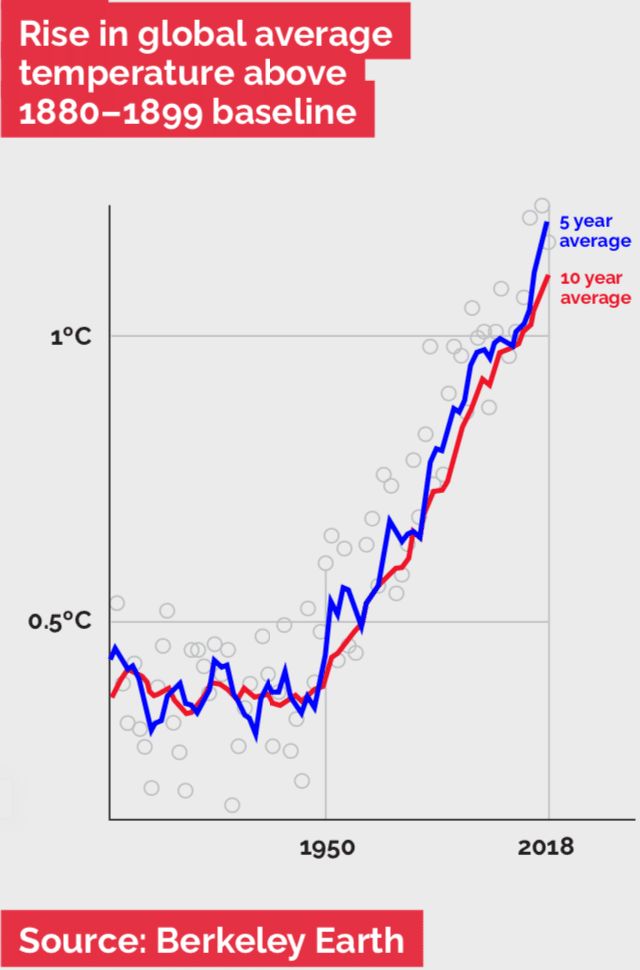
| Rise in Global Temperature above 18801899 baseline | MR OnlineThe climate and ecological crises threaten every aspect of human civilisation. Despite decades of warnings from scientists and others, greenhouse gas emissions and temperatures continue to soar. A domino effect of climate tipping points threatens to push the Earth into a state that is alien and inhospitable to human civilisation.

Still, mega-corporations ransack the natural world with support from their servants in public office. Governments who stray from protecting corporate interest in favour of human need are attacked and delegitimised in the billionaire press, face the prospect of international capital flight, and of political or military coups. This corruption of democracy sits at the heart of climate inaction.

Billions are threatened with starvation, displacement, drought and inundation within the next few decades. Scientists know business as usual cannot continue: it’s time to put our bodies where our mouths are and resist, for truth and life.

The Climate and Ecological Crisis

Human industrial activity has impacted the world as severely as the asteroid which wiped out the dinosaurs. 70% of the mammals, fish, birds, plants, amphibians, reptiles, and around half of the insects annihilated. Greenhouse gas emissions and temperatures soaring faster than at perhaps any point in Earth’s history. Climate tipping points being crossed – like the melting of the Arctic – accelerating heating and stripping humanity of meaningful control over our future.

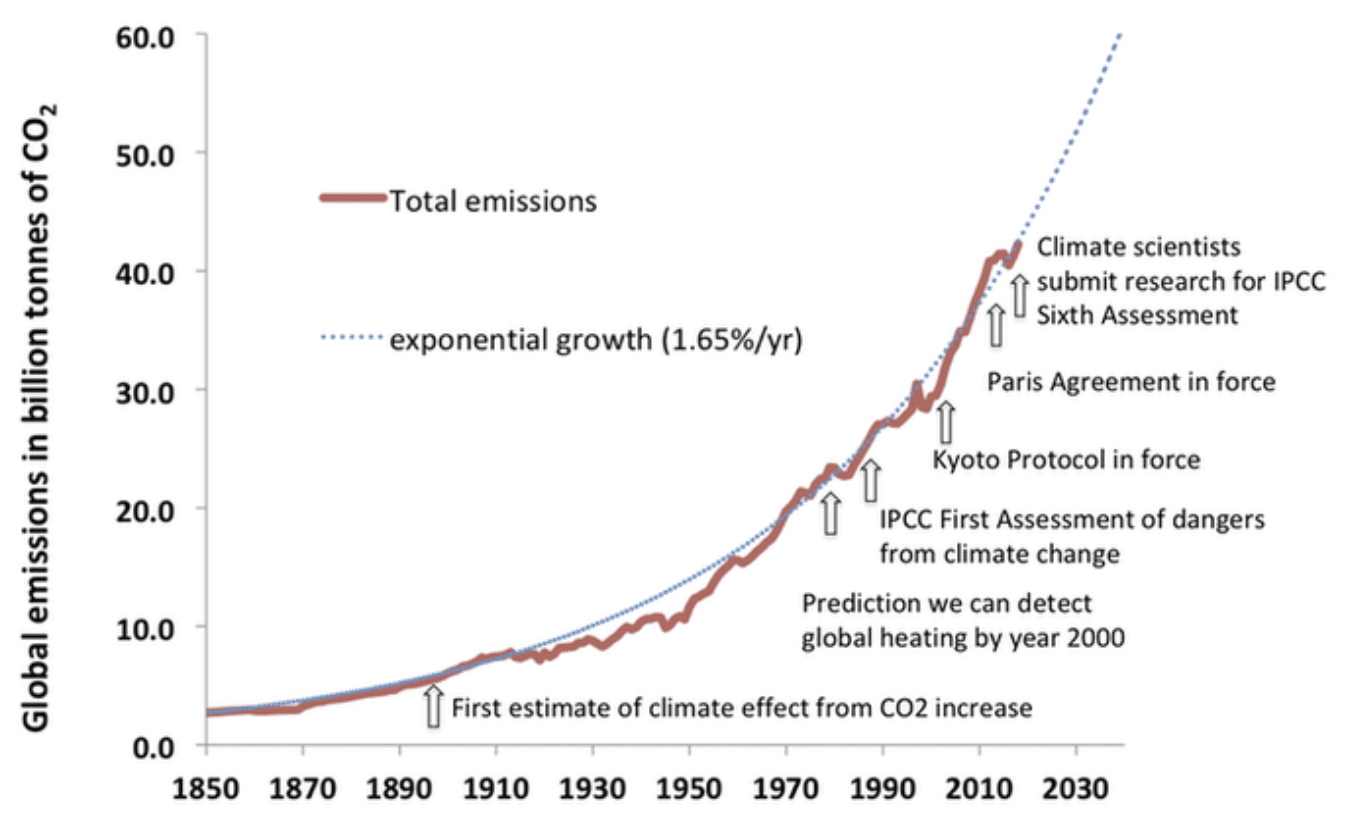
| Global Emissions in Billion Tonnes of CO2 | MR OnlineWe are heading toward a world at least 4°C hotter this century. The effects will be catastrophic. Even 2°C – which we are set to burn through by 2050 – means billions without enough food and water, hundreds of millions of refugees, historic natural disasters virtually every year, war, disease. Without political and economic revolution we face a nightmare from which we cannot wake. Scientists know this, and we are starting to resist.

Why We Rebel

Scientists have spent decades writing papers, advising government, briefing the press: all have failed. What is the point in documenting in ever greater detail the catastrophe we face, if we are not willing to do anything about it?

Academics are perfectly placed to wage a rebellion: we exist in rich hubs of knowledge and expertise; we are well connected across the world, and to decision-makers; we have large platforms from which to inform, educate and rally others all over the world; and we have implicit authority and legitimacy, which is the basis of political power. We can make a difference. We must do what we can to halt the greatest destruction in human history.

The storm before the storm

https://www.workers.org/2021/09/58808/

~~ posted for collectivist ~~

There is no doubt that the climate catastrophe threatens the future of life on the planet. A massive mobilization of the working class will be needed to combat this threat.

But, as Hurricane Ida and the associated flooding revealed, this is not just a threat to future generations — climate change is already a killer. Not only have dozens of people drowned in the hurricane’s wake, but hundreds are dead from the heat wave in the Northwest. 

Structural failures under capitalism are compounding the climate catastrophe for the working class. As the Sept. 3 New York Times admitted, “Disasters cascading across the country this summer have exposed a harsh reality: The United States is not ready for the extreme weather that is now becoming frequent as a result of a warming planet.”

We see a clear lack of preparedness in the richest country in the world. There is no regard for poor, oppressed and working-class people, who get no evacuation assistance in a life-threatening situation and are basically left to their own devices. 

The trillion-dollar infrastructure bill passed by Congress “includes $150 billion for clean energy and climate change protections. Tens of billions would also be utilized to fight extreme weather like drought, wildfire, flooding and erosion.” (PBS, Aug. 5)

Tens of billions is woefully inadequate. 

Consider, on the 16th anniversary of Hurricane Katrina, how Louisiana and Mississippi were devastated, their governments still not fully prepared for another major weather event. One million people remain without power and with little gas and water during the worst heat of the summer.

Floods devastated New York City. Here, Harlem subway station.

Throughout New York’s five boroughs and parts of New Jersey and Pennsylvania, people were trapped, some dying in flooded basement apartments, others unable to commute to work or do essential tasks due to collapsed roadways and bridges, totaled vehicles and flooded subways and expressways.

Lack of money isn’t the problem. There is incredible wealth concentrated in New York City and the surrounding areas, yet workers who produce that wealth were helpless in the rush of floodwaters. If the financial fortunes in Wall St. alone were taxed at the same rate as an average worker, funds could be used to prevent many of these tragic deaths.

Manhattan is an island of asphalt, with too little exposed soil to absorb floodwaters. The land was stolen from Indigenous people and then built up to serve the interests of finance capital — people and the environment be damned. As with every major urban center, money in the city budget — needed for infrastructure repairs and improvements — instead goes to city bondholders. Big Wall Street banks extort bloated interest payments from New York and other cash-strapped cities.

Time for ‘system change, not climate change’

“The pattern of damage reflects the relationship between climate exposure and racial inequality; impacts were more apparent in low-income communities of color, which, because of historic inequalities, are more prone to flooding, receive less maintenance from city services and frequently experience lax housing code enforcement,” the New York Times acknowledges.

Environmental terrorism and environmental racism in the U.S. are part of the legacy of capitalist development.

And the situation is far worse in the colonized Global South.

But socialist Cuba, with far fewer resources than the U.S., has created a model for hurricane evacuation that looks out for every human being — and even pets and livestock. The whole population is mobilized, and no one is left to fend for themselves.

A program of working-class demands is necessary to meet the twin crises of global warming and faulty or woefully inadequate infrastructure: Money for flood protection and relief, not for war! Money for cooling centers in a heat wave, not for tax breaks to the rich! Money for green jobs, not interest to the banks! People and the planet before profits; make the fossil fuel industry pay to clean up the messes it made! 

This is just a start. It will take a monumental struggle to win climate justice.

But rebellion is inevitable. Ida is the storm of wind and rain before the coming storm of protest. The challenge is to carry future waves of resistance through to their essential conclusion: a workers’ revolution for the abolition of capitalist wage-slavery.

Karl Marx and Friedrich Engels, writing in 1848, said the workers “have a world to win.” 

Saturday, September 4, 2021

The Double Deformation ~~ Michael A. Lebowitz

https://climateandcapitalism.com/2021/06/17/the-double-deformation/

 ~~ posted for collectivist ~~

Economic exploitation is only one aspect of capitalism. The crisis of humanity and the crisis of the earth system are inseparable


Michael A. Lebowitz is professor emeritus of economics at Simon Fraser University in Vancouver, Canada. His books include The Socialist Imperative, The Contradictions of Real Socialism, and Between Capitalism and Community, all published by Monthly Review Press. This article is excerpted, with permission, from “Know Your Enemy: How to Defeat Capitalism,” published this month in LINKS: International Journal of Socialist Renewal.

Find citations and extended arguments in Between Capitalism and Community (Monthly Review Press, 2020).

by Michael A. Lebowitz

The exploitation of workers is at the core of capitalism. It explains capital’s drive to divide workers in order to grow. Exploitation is the source of the inequality characteristic of capitalism. To fight inequality, we must fight capitalist exploitation. However, inequality is only one aspect of capitalism. In and by itself, exploitation is inadequate to grasp the effects of capital’s drive and thus the products of capitalism. Focus upon exploitation is one-sided because you do not know the enemy unless you understand the double deformation inherent in capitalism.

Recall that human beings and Nature are the ultimate inputs into production. In capitalist production, they serve specifically as means for the purpose of the growth of capital. The result is deformation — capitalistically-transformed Nature and capitalistically-transformed human beings. Capitalist production, Marx stressed, “only develops the technique and the degree of combination of the social process of production by simultaneously undermining the original sources of all wealth — the soil and the worker.”

But why?

The Deformation of Nature

By itself, Nature is characterized by a metabolic process through which it converts various inputs and transforms these into the basis for its reproduction. In his discussion of the production of wheat, for example, Marx identified a “vegetative or physiological process” involving the seeds and “various chemical ingredients supplied by the manure, salts contained in the soil, water, air, light.”

Through this process, inorganic components are “assimilated by the organic components and transformed into organic material.” Their form is changed in this metabolic process, from inorganic to organic through what Marx called “the expenditure of nature.” Also part of the “universal metabolism of nature” is the further transformation of organic components, their deterioration and dying through their “consumption by elemental forces.”

In this way, the conditions for rebirth (for example, the “vitality of the soil”) are themselves products of this metabolic process. “The seed becomes the unfolded plant, the blossom fades, and so forth.” Birth, death, renewal are moments characteristic of the “metabolism prescribed by the natural laws of life itself.”

This universal metabolism of Nature, however, must be distinguished from the relation in which a human being “mediates, regulates and controls the metabolism between himself and nature.” That labor process involves the “appropriation of what exists in nature for the requirements of man. It is the universal condition for the metabolic interaction between man and nature.” This “ever-lasting nature-imposed condition of human existence,” Marx pointed out, is “common to all forms of society in which human beings live.”

As we have indicated, however, under capitalist relations of production, the preconceived goal of production is the growth of capital. The particular metabolic process that occurs in this case is one in which human labor and Nature are converted into surplus value, the basis for that growth.

Accordingly, rather than a process that begins with “man and his labour on one side, nature and its materials on the other,” in capitalist relations the starting point is capital, and “the labour process is a process between things the capitalist has purchased, things which belong to him.” It is “appropriation of what exists in nature for the requirements” not of man but of capital.

There is, as noted, “exploration of the earth in all directions” for a single purpose— to find new sources of raw materials to ensure the generation of profits. Nature, “the universal material for labour,” the “original larder” for human existence, is here a means not for human existence but for capital’s existence.

As we have seen, while capital’s tendency to grow by leaps and bounds comes up against a barrier insofar as plant and animal products are “subject to certain organic laws involving naturally determined periods of time”, capital constantly drives beyond each barrier it faces.

However, there is a barrier it does not escape. Marx noted, for example, that “the entire spirit of capitalist production, which is oriented towards the most immediate monetary profit — stands in contradiction to agriculture, which has to concern itself with the whole gamut of permanent conditions of life required by the chain of human generations.” Indeed, the very nature of production under capitalist relations violates “the metabolic interaction between man and the earth,” it produces “an irreparable rift in the interdependent process of social metabolism, a metabolism prescribed by the natural laws of life itself.”

That “irreparable” metabolic rift that Marx described is neither a short-term disturbance nor unique to agriculture. The “squandering of the vitality of the soil” is a paradigm for the way in which the “metabolism prescribed by the natural laws of life itself” is violated under capitalist relations of production.

In fact, there is nothing inherent in agricultural production that leads to that “squandering of the vitality of the soil.” On the contrary, Marx pointed out that a society can bequeath the earth “in an improved state to succeeding generations.” But this requires an understanding that “agriculture forms a mode of production sui generis, because the organic process is involved, in addition to the mechanical and chemical process, and the natural reproduction process is merely controlled and guided.” The same is true, too, in the case of fishing, hunting, and forestry. Maintenance and improvement of the vitality of the soil and of other sectors dependent upon organic conditions requires the recognition of the necessity for “systematic restoration as a regulative law of social production.”

With every increase in capitalist production, there are growing demands upon the natural environment, and the tendency to exhaust Nature’s larder and to generate unabsorbed and unutilizable waste is not at all limited to the metabolic rift that Marx described with respect to capitalist agriculture.

Thus, Marx indicated that “extractive industry (mining is the most important) is likewise an industry sui generis, because no reproduction process whatever takes place in it, at least not one under our control or known to us,” and, he noted as well “the exhaustion of forests, coal and iron mines, and so on.” Given its preoccupation with its need to grow, capital has no interest in the contradiction between its logic and the “natural laws of life itself.” The contradiction between its drive for infinite growth and a finite, limited earth is not a concern because for capital there is always another source of growth to be found.

Like a vampire, it seeks the last possible drop of blood and does not worry about keeping its host alive.

Accordingly, since capital does not worry about “simultaneously undermining the original sources of all wealth — the soil and the worker,” sooner or later it destroys both. Marx’s comment with respect to capital’s drive to drain every ounce of energy from the worker describes capital’s relation to the natural world precisely:

“Après moi le deluge! is the watchword of every capitalist and every capitalist nation. Capital therefore takes no account of the health and the length of life of the worker, unless society forces it to do so.”

We are seeing the signs of that approaching deluge. Devastating wildfires, droughts, powerful hurricanes, warming oceans, floods, rising sea levels, pollution, pandemics, disappearing species, etc., are becoming commonplace — but there is nothing in capital’s metabolic process that would check that. If, for example, certain materials become scarce and costly, capital will not scale back and accept less or no growth; rather, it will scour the earth to search for new sources and substitutes.

Can society prevent the crisis of the earth system, the deluge? Not currently. The ultimate deformation of Nature is the prospect because the second deformation makes it easier to envision the end of the world than the end of capitalism.

The Deformation of Human Beings

Human beings are not static and fixed. Rather, they are a work in process because they develop as the result of their activity. They change themselves as they act in and upon the world. In this respect there are always two products of human activity — the change in circumstances and the change in the human being. In the very act of producing, Marx commented, “the producers change, too, in that they bring out new qualities in themselves, develop themselves in production, transform themselves, develop new powers and new ideas, new modes of intercourse, new needs and new language.”

In the process of producing, the worker “acts upon external nature and changes it, and in this way he simultaneously changes his own nature.”

In this “self-creation of man as a process,” the character of that human product flows from the nature of that productive activity. Under particular circumstances, that process can be one in which people are able to develop their capacities in an all-rounded way.

As Marx put it, “when the worker co-operates in a planned way with others, he strips off the fetters of his individuality, and develops the capabilities of his species”. In such a situation, associated producers may expend “their many different forms of labour-power in full self-awareness as one single social labour force”, and the means of production are “there to satisfy the worker’s own need for development.”

For example, if workers democratically decide upon a plan, work together to achieve its realization, solve problems which emerge and shift in this process from activity to activity, they engage in a constant succession of acts which expand their capacities. For workers in this situation, there is the “absolute working-out of his creative potentialities,” the “complete working out of the human content,” the “development of all human powers as such the end in itself.”

Collective activity under these relations produces “free individuality, based on the universal development of individuals and on their subordination of their communal, social productivity as their social wealth.” In the society of the future, Marx concluded, the productive forces of people will have “increased with the all-round development of the individual, and all the springs of co-operative wealth flow more abundantly”.

But that’s not the character of activity under capitalist relations of production, where “it is not the worker who employs the conditions of his work, but rather the reverse, the conditions of work employ the worker.” While we know how central exploitation is from the perspective of capital, consider the effects upon workers of what capital does to ensure that exploitation. We’ve seen how capital constantly attempts to separate workers and, indeed, fosters antagonism among them (the “secret” of its success); how capital introduces changes in production that divides them further, intensifies the production process and expands the reserve army that fosters competition.

What’s the effect? Marx pointed out that “all means for the development of production” under capitalism “distort the worker into ah fragment of a man,” degrade him and “alienate him from the intellectual potentialities of the labour process”. In Capital, he described the mutilation, the impoverishment, the “crippling of body and mind” of the worker “bound hand and foot for life to a single specialized operation” that occurs in the division of labor characteristic of the capitalist process of manufacturing.

But did the subsequent development of machinery end that crippling of workers? Marx’s response was that under capitalist relations such developments complete the “separation of the intellectual faculties of the production process from manual labour.” Thinking and doing become separate and hostile, and “every atom of freedom, both in bodily and in intellectual activity” is lost.

In short, a particular type of person is produced in capitalism. Producing within capitalist relations is what Marx called a process of a “complete emptying-out,” “total alienation,” the “sacrifice of the human end-in-itself to an entirely external end”. Indeed, the worker is so alienated that, though working with others, he “actually treats the social character of his work, its combination with the work of others for a common goal, as a power that is alien to him.”

In this situation, in order to fill the vacuum of our lives, we need things — we are driven to consume. In addition to producing commodities and capital itself, thus, capitalism produces a fragmented, crippled human being, whose enjoyment consists in possessing and consuming things. More and more things. Capital constantly generates new needs for workers, and it is upon this, Marx noted, that “the contemporary power of capital rests.”

In short, every new need for capitalist commodities is a new link in the golden chain that links workers to capital.

Accordingly, rather than producing a working class that wants to put an end to capitalism, capital tends to produce the working class it needs, workers who treat capitalism as common sense. As Marx concluded:

“The advance of capitalist production develops a working class which by education, tradition and habit looks upon the requirements of that mode of production as self-evident natural laws. The organization of the capitalist process of production, once it is fully developed, breaks down all resistance.”

To this, he added that capital’s generation of a reserve army of the unemployed “sets the seal on the domination of the capitalist over the worker.” That constant generation of a relative surplus population of workers means, Marx argued, that wages are “confined within limits satisfactory to capitalist exploitation, and lastly, the social dependence of the worker on the capitalist, which is indispensable, is secured.”

Accordingly, Marx concluded that the capitalist can rely upon the worker’s “dependence on capital, which springs from the conditions of production themselves, and is guaranteed in perpetuity by them.”

However, while it is possible that workers may remain socially dependent upon capital in perpetuity, that doesn’t mean that capital’s incessant growth can continue in perpetuity. In fact, given that workers deformed by capital accept capital’s requirement to grow “as self-evident natural laws,” their deformation supports the deformation of Nature.

In turn, the increase in flooding, drought and other extreme climate changes and resulting mass migrations which are the product of the deformation of Nature intensify divisions and antagonism among workers. The crisis of the earth system and the crisis of humanity are one.

Thursday, August 26, 2021

What the Sunrise Movement Can Do Better ~~ JOHNATHAN GUY SAM ZACHER

jacobinmag.com/2021/08/sunrise-movement-green-new-deal-left-politics-local-organizing?mc_cid=8a9e8d27da&mc_eid=2206b60e8c

~~ suggested by a guest contributor ~~

The Sunrise Movement deserves enormous credit for putting the Green New Deal on the national political agenda. But the organization seems to have hit a wall as of late. It may be time for Sunrise to pursue a new direction in its tactics

BIDEN YOU COWARD — FIGHT FOR US,” the sign blared. A few hundred members of the Sunrise Movement had gathered near the White House late last month to protest the Biden administration’s proposed compromise with Republicans on infrastructure legislation, jettisoning most of the climate provisions from an already inadequate bill. Speeches were made, songs sung; many Sunrisers sat down in the road before being dragged away by the police.

For long-time observers, these scenes have become a familiar sight. Such tactics are Sunrise’s bread and butter. The organization focuses on direct action and coordinating national media blitzes, most famously their late 2018 sit-in at Nancy Pelosi’s office. Actions like these use multiday trainings which erupt in carefully calibrated protests meant to “ignite moral conflict” between climate action heroes and fossil fuel villains, move public opinion, and recruit more members into the organization. By tying climate action to economic security and racial justice, Sunrise believes the Green New Deal’s message can call a multiracial, working-class climate coalition into being.

This strategy has yielded dividends. Since 2018, Sunrise has effectively popularized and refocused public discourse around the Green New Deal (GND). While the GND is demonized by conservative media and shunned by centrist Democrats, many of its core policies receive majority support among the public. The other plank of Sunrise’s efforts — mobilizing a small army of volunteers to knock doors and make calls for progressive local and Congressional races — has contributed to a rising crop of new electeds loyal to GND-style messaging and legislation.Yet Sunrise’s tactical repertoire is running up against hard limits. In contrast to the generous and relatively favorable media coverage the group received early on, attention to Sunrise direct actions has waned. Multiday marches through California and the Gulf Coast in May and June, for example, received little to no media coverage. The June 28 action earned some attention, but the reception by journalists, commentators, and on social media was mixed. Many observers criticized the action for targeting Biden instead of Congress, which presents more serious obstacles to significant climate spending.

The blogosphere pounced, accusing Sunrisers of engaging in pageantry that stands no chance of improving, and perhaps could damage, the prospects for meaningful climate action. While some of the criticisms offered ring hollow — contra Matt Yglesias, who argues Sunrise’s only accomplishment is “fooling gullible journalists,” Sunrise has moved latent public opinion and moved climate change onto the political agenda — it is true that despite their best efforts, Sunrise and its allies seem powerless to stop the watering down of climate legislation at the hands of Joe Manchin and company.

A number of warning signs have emerged over the past year that American politics is moving in quite a different direction than the vision of multiracial populism which anchors Sunrise’s long-term strategy. Voters of color shifted away from the Democratic Party in 2020, compounding the issues presented by the long-standing departure of white working-class Democrats. The decline of trade unions, the black church, and other mass organizations means most Americans have no personal experience participating in politics beyond casting an occasional ballot, or even organized social life more generally.

Right-wing attacks on state capacity, police brutality, and mass incarceration have convinced many Americans that the government is necessarily incompetent at best and malevolent at worst, undermining the public faith in the state required for any Green New Deal project. Meanwhile, the relatively affluent, college-educated segment of the Democratic Party base seems wholly uninterested in any but the most modest demands of social movements like Black Lives Matter. While the Bernie campaign showed that there is a significant hunger for social-democratic politics, it wasn’t enough to push Sanders to victory, and workers across the country are not engaged in significant amounts of organizing and class struggle on the job.

This is the moment we find ourselves in. What kind of political shift can Sunrisers and other Green New Dealers actually effect in the next ten years? And how do we navigate the political terrain’s current openings and constraints to accomplish it?

In the case of Sunrise, we offer a simple diagnosis. While Sunrise has significant potential, it stands at a remove from the vast majority of people the organization wishes to mobilize. Sunrise is socially dis-embedded from American society. In order to succeed, Sunrise must develop an ideological analysis that clarifies what the group wants and why its strategy will accomplish it; penetrate a much broader cross section of the population beyond its largely affluent, highly educated, and metropolitan membership; and focus on developing a mass base of support at local levels.

What Is Sunrise’s Ideology?

Our analysis draws from dozens of interviews with Sunrise members across the country over the past six months, as well as our combined twenty years of experience studying and organizing within the American climate movement. Our critique is meant to be constructive and friendly: we hope that it meaningfully contributes to the conversation on the direction of Sunrise and the collective Green New Deal project.

In order to understand why Sunrise has stalled, we first have to ask a basic question: What is Sunrise’s ideology? The organization sends mixed signals.

Early on, the organization self-described as “[looking] neither left nor right, but forward.” In the years since, Sunrise has become more comfortable affiliating itself with left-wing ideas and groups, and frequently critiques capitalism on social media. Still, the guiding principles for Sunrise’s agenda — to “stop climate change and create millions of good jobs in the process” and “fight for the liberation of all people” — are so broad as to include many incompatible political commitments.

For example, a Green New Deal could mean nationalization or buyout of the nation’s energy system, or a series of federal investments that encourage further private sector participation. Collective liberation per one definition could mean grants, contracts, and discounted loans to minority-owned businesses, or the abolition of privately owned corporations and natural resources, prisons, and police. With a stated ideology this broad, it’s difficult to assess what compromises are worth making, or how to measure success.

We don’t believe Sunrise and the GND have to be an explicitly socialist project, but we do believe that a deeper ideology would clarify the direction of the policy battles that Sunrise prioritizes. The organization’s list of legislative priorities this year is nearly two dozen items long, yet it’s not clear how Sunrise assigns these relative weight, or why.

The Civilian Climate Corps might make sense from an organizing perspective, but, from our interviews, this hasn’t been communicated effectively to Sunrise’s members, making buy-in more difficult. And this is just at the national level: there are always strategic dilemmas regarding GND-inspired policies to lead with or support at the state and local levels, which would be easier to navigate if Sunrise’s ideal policy aims were defined.

For example, earlier this year, Sunrise New Haven faced a choice about whether to fight for more local government stimulus-sourced investment in GND projects, higher taxation of carbon-greedy mansions at the state level, a greater contribution by company town overlord Yale University to the city budget (in order to build rapport with local unions and other progressive groups), or to prevent the construction of a new pipeline elsewhere in the state. The local hub put some effort into a few of each of these battles but didn’t have the ideological depth to prioritize a particular goal — and has fallen back on doing whatever people in the room (largely untrained) are most energized about.

The result has been the fragmentation of energy across different projects, decreasing the probability that any will be successful, in addition to taking too much time to decide on every subsequent project.

More generally, Sunrise has been criticized for bringing in a hodgepodge of left causes ranging from Palestinian liberation to policing into its messaging and programming, leading to a sense that the group lacks direction and coherence. While many of these critiques are made in bad faith by those who do not support such causes, they raise a useful question: How should limited time and resources be allocated, given Sunrise’s largely correct but wide-ranging political commitments on a variety of issues? The choice may not be easy without a more clearly defined ideology.

Ideology is useful not just because it articulates a political vision, but because it provides an idea of how the world presently works — and, by extension, how we might successfully intervene in it. The concepts that Sunrise typically deploys to describe this part of its ideology — “people power” and “political power,” for instance — are too abstract to be useful. Why and when are the people powerful?

After all, many social movements with both majority public support and an intense core of activists fall short (like the Arab Spring or recent protests in Hong Kong), while others with minority support succeed (like the Civil Rights Movement). Even those movements which get a taste of political power are often unable to effectively use the state to achieve their goals, as shown by left-populist Syriza’s capitulation to the austerity-minded European Union in 2011, as well as countless socialist governments in the Global South constrained by economic sanctions and capital flight.

For insight into these questions, we can turn to the organizing model behind Sunrise: Momentum.

The Momentum Model

Momentum is a self-described “training institute and movement incubator” influenced by “nonviolent resistance” thinkers and practitioners such as Gene Sharp, Erica Chenoweth, and Mark and Paul Engler. Momentum attempts to use tactics from myriad twentieth- and early twenty-first-century social movements — the Civil Rights Movement, the anti-apartheid movement in South Africa, the Indian independence movement, Occupy Wall Street — and synthesize them into a single model.

That model consists of a virtuous cycle of tactics: first, a small group of activists stage a series of (often theatrical) protests, hoping to attract media coverage and thus public attention. The protests will involve a “polarizing” demand that provokes a sense of crisis, forcing onlookers to feel like they have to take a side. Those that favor the protests will then join the movement, replicating its tactics, symbols, and slogans at mass scale with minimum coordination, like Black Lives Matter.

Finally, those who enter the movement are “absorbed” into a preplanned organizational structure which allows for the staging of increasingly large and dramatic protests which recruit even larger numbers, and in turn enable mass acts of “non-cooperation.” The cycle of protest, absorption, and training continues until it results in victory.

What “victory” entails depends on the movement in question — and this is precisely the problem. In its attempt to provide a universal template for left-leaning activists in the twenty-first century, Momentum raises more questions than it answers. Do the social movements they aim to replicate really have anything in common?

Each succeeded or failed under very different historical conditions, with their own ideas and goals. The underlying “theories of change” expressed by these movements often conflict significantly with each other.

For example, while Mahatma Gandhi embraced an absolutist course of nonviolence — going so far as to forbid cursing or insulting political opponents — Nelson Mandela came to embrace tactics such as bombing campaigns and guerrilla warfare, arguing they were indispensable for compelling the apartheid regime to negotiate with the African National Congress (ANC).

What’s more, these men and the tactics they symbolically represent do not exhaust the full repertoire of tactics used by the movements they belonged to: the Indian Independence movement, for instance, involved riots, sabotage, and mass strikes, which Gandhi abhorred but to which many historians attribute the movement’s ultimate success.

Sunrise activists march to the White House in Washington, DC to demand that President Joe Biden work to make the Green New Deal into law on June 28, 2021. (Chip Somodevilla / Getty Images)

The differences between movements extend well beyond tactics. For much of its apartheid-era history, many ANC leaders embraced Marxism and maintained warm relations with the Soviet Union and Cuba, a development that leaders of the anti-Soviet color revolutions in Europe (also cited approvingly by Momentum) would surely detest.

While the great campaigns of the Civil Rights Movement were orchestrated by a constellation of groups exercising organizational discipline, a class of publicly known leaders, and a recruitment model deeply rooted in traditional institutions such as the black church, labor unions, and social clubs, Occupy Wall Street eschewed a leadership cadre, embraced participatory democracy, and relied on social media networks for quick mobilization.

These movements attempted to reach different populations at different times for different purposes. Even if it wanted to, Occupy couldn’t draw upon the social base that was available to civil rights organizers in mid-century American South. Nor could the Student Nonviolent Coordinating Committee (SNCC) use the internet.

Ideology that served some movements well failed others. Mandela’s embrace of guerrilla tactics after the 1960 Sharpeville Massacre was motivated in part by a disillusionment with the Gandhian brand of nonviolence, which had seemingly delivered independence from the British thirteen years earlier and inspired ANC partisans to adopt a similar strategy. Revolutionary Marxism-Leninism delivered the Bolsheviks victory in 1910s feudal Russia, but not so much the Weather Underground in mid-to-late century America.

Gilded Age populism and WWII-style Keynesianism with a green twist have both been advanced as ideas that would make climate policy more popular, but polling shows these are among the least compelling pitches for the GND to the American public. Left parties pursuing “Third Way” neoliberal politics saw tremendous electoral success in the 1990s, yet now in many countries are struggling to maintain political relevance.

These instances of variation are understandable: each successful movement, in both its tactics and messaging, astutely captured and articulated the realities of its own time and place in a way that resonated for that moment. Having an ideology outfitted for its unique historical context was critical to each movement’s successes. In its ambition to be objective-neutral and ideologically agnostic, the Momentum model overlooks this critical insight.

Even if twentieth-century social movements did succeed for the same reasons, do they necessarily apply to the contemporary climate movement? Of the myriad movements Momentum draws upon, perhaps the most influential is Otpor, which ended the rule of Slobodan MiloÅ¡ević in Serbia at the turn of the twenty-first century. But deposing a dictator is quite a different task than equitably decarbonizing a national economy — something that, it should be noted, has never been accomplished anywhere — and a theory of change that applies equally to both is unlikely to be useful.


What ideological orientation might resonate for our time and place, retaining the interest and commitment of new members long after the exhilaration of initial success has worn off? What sort of “noncooperation” might be necessary to win a Green New Deal, whenever we decide it might be?

Sunrise has yet to fill in the gaps. For example, a youth strike of some kind to demand climate change action is now frequently entertained in Sunrise circles. Why is this the best tactic for America in 2021, especially when most of our youth have never heard of Sunrise, and most of those who have are not prepared to endure the legal consequences of striking?Reasons Sunrise and adjacent climate movement leaders give for striking evoke abstract concepts such as “disruptiveness” that could or could not apply in any given time and place, and risk conflating a school strike with a labor strike. The Fridays for Future climate strikes of 2019–20, led by school children around the world, were certainly disruptive, yet so far their effort has fallen short of winning ambitious climate policy. This outcome should be enough to cast doubt on any one-size-fits-all axioms plucked from social-scientific literature.

Even as children were exempted from school for “strike” days and encouraged by their parents, only a fraction participated, even in the most active countries — far fewer than would be needed to grind society to a halt. What strike numbers for how long a period of time are necessary to force the government into action? How can Sunrise achieve and sustain this level of strike participation, especially given the sacrifices required?

If these questions are not taken seriously, precious years may be wasted on pursuing tactics which bear little fruit. Yet answering them requires a serious analysis of American society and the specific opportunities it presently offers — and, just as importantly, the ones it does not.

Perhaps Sunrise’s leadership has conducted such an analysis behind the scenes; however, actions like the “Generation on Fire” marches in California and the Gulf South make us worry that the organization is simply copy-and-pasting from the Civil Rights Movement playbook. Over the years, hundreds of left-leaning causes have attempted their own version of the Freedom Marches, or held a rally on the National Mall near the Lincoln Memorial. None have been a tenth as effective as the original.

For this reason, we call on Sunrise to turn away from the idea of a singular “craft” of social movements which can be distilled and applied from the past, and instead be more inventive in its analysis, tactics, messaging, and goals. Additionally, we call on Sunrise’s ideology-as-strategy to be less moralist and more materialist — that is, cognizant of how people’s position in the economy and society affects their worldview and ability to exert power.

Momentum relies on the idea that protests “drive a wedge into the public’s moral conscience.” But whether such protests do drive a wedge depends not only on what language is used, but also whether the audience is in a position to be receptive to any message.

This is not just the work of messaging: it is the work of organization, especially at the local level.

National-Hub Relations: A Story of Contradictions

Sunrise’s organizational structure currently employs a self-defeating mix of centralization and decentralization. Despite Sunrise’s design as a decentralized “mass movement,” in practice, a national core team based in Boston and DC sends out movement directives to the four hundred–plus “hubs” across the country. This process is anything but democratic: the hubs have no institutionalized say in the direction of strategy, which is formulated by the national team before being sent to the local hubs for implementation — usually without their input, often without advance notice, and always without a vote.

The effect is a set of dynamics that work at cross-purposes: decentralized strategy implementation without much decentralized strategy development, and centralized leadership without much centralized power.

The potential benefits of centralized command — such as improved coordination and organizational discipline — are undermined by the fact that hubs are not actually required to follow any directives from the core. One Sunrise local leader told us, “Many hubs simply formulate their own strategies on their own time and resources, because the national strategy won’t work for them.”

The team which produces this strategy and serves as the face of the organization nationally, meanwhile, is hyper-focused on federal politics — in particular, via actions designed to grab national news media attention — putting community organizing in the back seat. This focus put the GND on the national political agenda, but has stalled since. Given the difficulty of winning Congressional majorities that can pass meaningful legislation and get through the courts, keeping state and local politics in main sight is crucial for movement victories. No power can even be exerted at the federal level without local, deep-seated, organized power bases in cities, towns, congressional districts, and states.

Sunrise Movement protest inside Nancy Pelosi’s office at the White House to advocate that Democrats support the Green New Deal, 2018. (Michael Brochstein / Getty Images)

Yet the unidirectional flow of information within Sunrise prevents the national core team from being able to meaningfully assist with local base-building. A frequent complaint in interviews was that directives from above often display a “one-size-fits-all” approach ill-suited to local conditions.

New organizers are left without the tools required to assess their surroundings. What is the basis of the local economy? What are the demographics and local political institutions, the civil associations and social networks? Where are the bases of political power? Sunrise trainings include a “power-mapping” exercise, but — in our experience — it focuses too much on pressuring particular individuals without explaining how to identify these individuals, why influence might flow in a particular direction, and when and how to exert pressure accordingly.

Without an ideology, it’s hard for local organizers to make sense of their surroundings. It also leaves them stranded when events take an unexpected turn — say, an election delivers a surprise result, popular opposition to a campaign materializes out of nowhere, or an opponent (say, an employer, mayor, or presiding police captain) retaliates without warning.

The absence of movement democracy can also lead to disinvestment from a group’s rank-and-file members. This has been demonstrated by “Big Green” groups in the US, whose budgets have grown while mass participation is minimal. Signs such as the ongoing conflict between the Sunrise Black Caucus and national leadership over the organization’s funding and lack of democracy indicate that Sunrise is in danger of following this route.

Institutionalizing a more democratic national structure of decision-making — similar to that of the Democratic Socialists of America (DSA), where elected delegates from each chapter meet to decide on nationwide strategy and goals — would increase the legitimacy of national leadership, open vital channels of deliberation, and allow for hub autonomy when necessary to embed Sunrise more deeply within community life. DSA’s structure isn’t perfect — in fact, the organization would benefit from a more binding strategy decided at the national level — but democratizing Sunrise would make it more likely that local hubs accept and implement a centrally decided national strategy, improving upon coordination and cohesion overall.

The Hub Model: Fast but Shallow Growth

The tensions between the national core and local hubs bring us to the hub model itself — in particular, its pattern of recruitment. College-bound high schoolers, college students, and recent college grads in metro areas with somewhat lefty inclinations and climate anxiety are drawn to meetings by their immediate networks. These recruits are disproportionately affluent, highly educated, and likely to hail from a handful of selective high schools and universities.

Sunrise has taken some strides toward improving the group’s racial diversity, but has still fallen short of substantive multiracial representation, as evidenced by repeated claims that national leadership has not engaged with Sunrise Black Caucus demands about movement strategy, structure, and funding.

While this recruitment pattern can be efficient, it presents two structural obstacles to embedding Sunrise meaningfully and durably within society writ large. First, the predominance of upwardly mobile college and high school students in Sunrise’s ranks means that most of its members are transients. Rather than putting down roots in the given community, they will move to a different part of the country within the next few years.

This compounds the “town-gown” issue endemic to most youth-centered organizing: despite living in close proximity with each other, universities and the communities who host them often maintain hostile relations. College students are among the least socially embedded members of their community, frequently resented by locals for their privileges and afforded little social authority or respect, making them less-than-ideal community organizers. Second, the reliance on peer-to-peer recruitment results in an organizational base that is demographically cloistered along lines of race, class, and education and does not reflect the local youth more broadly.

Adjacent movement groups, YDSA included, also struggle with making their membership more representative of the communities they’re trying to mobilize. A recruiting strategy that explores and maps out the social networks of youth in the local community who are not likely to be reached through traditional Sunrise peer recruitment is essential.

The Sanders presidential campaigns did this successfully in California, tapping into enthusiastic but previously neglected subpopulations such as attendees of community colleges, trade schools, and alternative high schools. We also suggest implementing more rules — or at least guidelines — about who can start Sunrise hubs, such as requirements about planning to stay in the region long-term, as well as recruiting beyond immediate peers.

It’s Crunch Time

Sunrise is unquestionably the most successful political venture the American climate movement has ever produced. The emphasis on media attention-getting stunts — a textbook application of the Momentum model — was perfectly suited for the pre-Biden era.

Yet as the action turns from setting the political agenda to winning and implementing policy over the long term, Sunrise’s existing model has clear limitations. It remains largely dis-embedded from American society, unable to form the mass organization and ideological assent required to structurally transform the economy within ten to fifteen years — which we absolutely need to do to realize a livable future.

We know that activists at the center of Sunrise — and adjacent climate movement orgs — are already rethinking movement strategy. The task ahead is enormous. A new phase of the struggle is here. How will Sunrise — and the rest of us — change to win it?