https://www.democracynow.org/2021/9/14/fairy_creek_blockade_bc_canada#transcript
~~ posted for collectivist ~~
https://mronline.org/2021/09/09/we-are-scientists-calling-for-a-climate-revolution
~~ posted for collectivist ~~

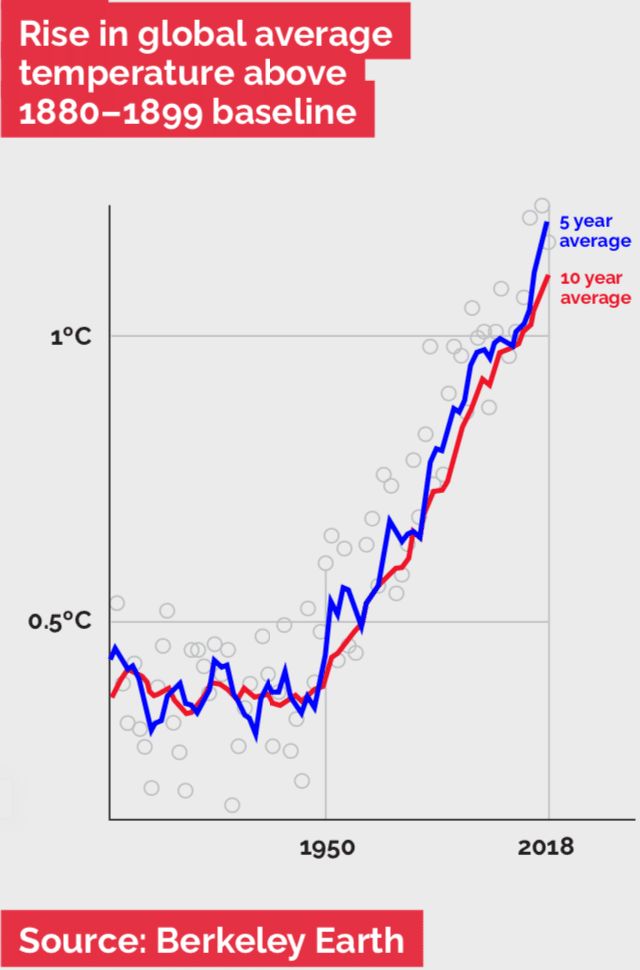 The climate and ecological crises threaten every aspect of human civilisation. Despite decades of warnings from scientists and others, greenhouse gas emissions and temperatures continue to soar. A domino effect of climate tipping points threatens to push the Earth into a state that is alien and inhospitable to human civilisation.
Still, mega-corporations ransack the natural world with support from their servants in public office. Governments who stray from protecting corporate interest in favour of human need are attacked and delegitimised in the billionaire press, face the prospect of international capital flight, and of political or military coups. This corruption of democracy sits at the heart of climate inaction.
Billions are threatened with starvation, displacement, drought and inundation within the next few decades. Scientists know business as usual cannot continue: it’s time to put our bodies where our mouths are and resist, for truth and life.
Human industrial activity has impacted the world as severely as the asteroid which wiped out the dinosaurs. 70% of the mammals, fish, birds, plants, amphibians, reptiles, and around half of the insects annihilated. Greenhouse gas emissions and temperatures soaring faster than at perhaps any point in Earth’s history. Climate tipping points being crossed – like the melting of the Arctic – accelerating heating and stripping humanity of meaningful control over our future.
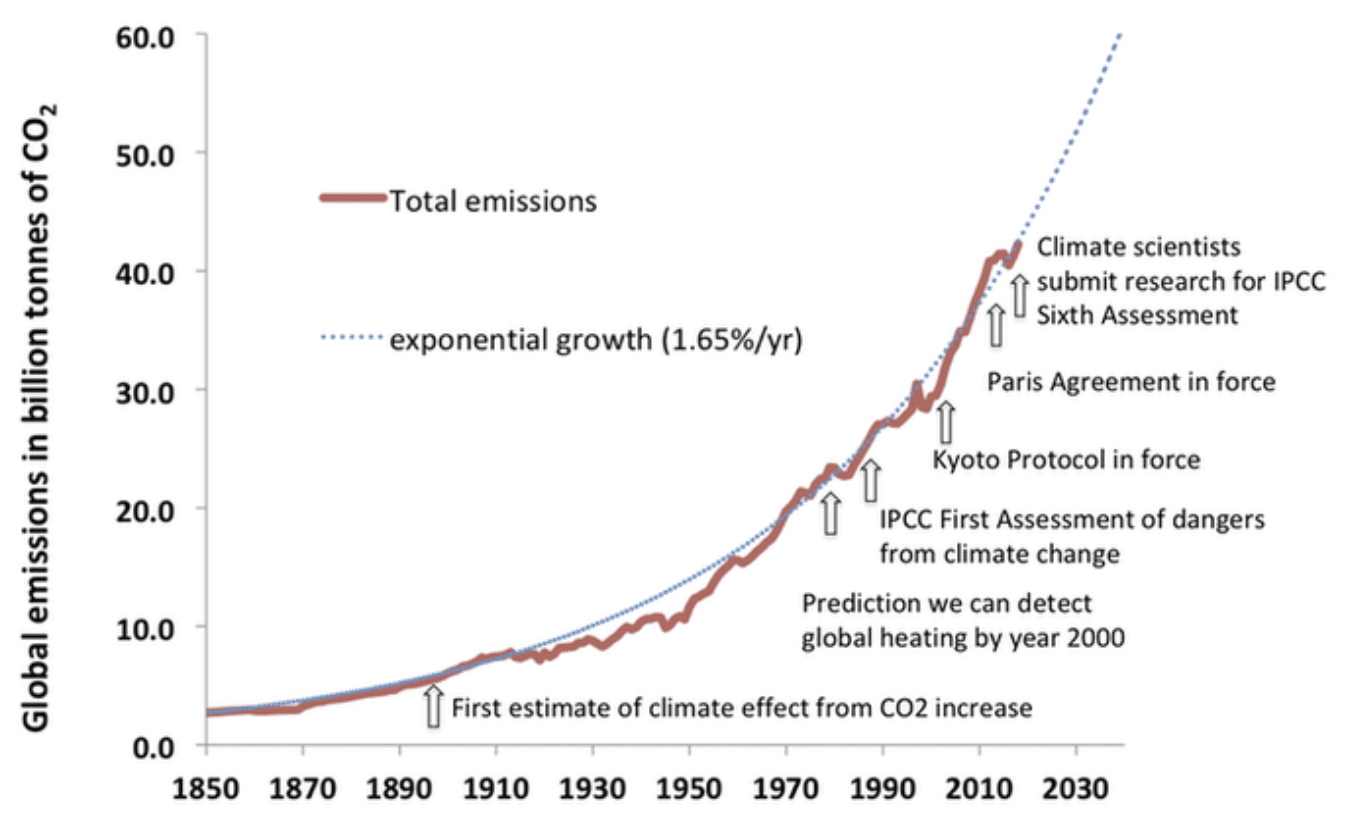 We are heading toward a world at least 4°C hotter this century. The effects will be catastrophic. Even 2°C – which we are set to burn through by 2050 – means billions without enough food and water, hundreds of millions of refugees, historic natural disasters virtually every year, war, disease. Without political and economic revolution we face a nightmare from which we cannot wake. Scientists know this, and we are starting to resist.
~~ suggested by a guest contributor ~~
The Sunrise Movement deserves enormous credit for putting the Green New Deal on the national political agenda. But the organization seems to have hit a wall as of late. It may be time for Sunrise to pursue a new direction in its tactics
BIDEN YOU COWARD — FIGHT FOR US,” the sign blared. A few hundred members of the Sunrise Movement had gathered near the White House late last month to protest the Biden administration’s proposed compromise with Republicans on infrastructure legislation, jettisoning most of the climate provisions from an already inadequate bill. Speeches were made, songs sung; many Sunrisers sat down in the road before being dragged away by the police.
For long-time observers, these scenes have become a familiar sight. Such tactics are Sunrise’s bread and butter. The organization focuses on direct action and coordinating national media blitzes, most famously their late 2018 sit-in at Nancy Pelosi’s office. Actions like these use multiday trainings which erupt in carefully calibrated protests meant to “ignite moral conflict” between climate action heroes and fossil fuel villains, move public opinion, and recruit more members into the organization. By tying climate action to economic security and racial justice, Sunrise believes the Green New Deal’s message can call a multiracial, working-class climate coalition into being.
This strategy has yielded dividends. Since 2018, Sunrise has effectively popularized and refocused public discourse around the Green New Deal (GND). While the GND is demonized by conservative media and shunned by centrist Democrats, many of its core policies receive majority support among the public. The other plank of Sunrise’s efforts — mobilizing a small army of volunteers to knock doors and make calls for progressive local and Congressional races — has contributed to a rising crop of new electeds loyal to GND-style messaging and legislation.Yet Sunrise’s tactical repertoire is running up against hard limits. In contrast to the generous and relatively favorable media coverage the group received early on, attention to Sunrise direct actions has waned. Multiday marches through California and the Gulf Coast in May and June, for example, received little to no media coverage. The June 28 action earned some attention, but the reception by journalists, commentators, and on social media was mixed. Many observers criticized the action for targeting Biden instead of Congress, which presents more serious obstacles to significant climate spending.
The blogosphere pounced, accusing Sunrisers of engaging in pageantry that stands no chance of improving, and perhaps could damage, the prospects for meaningful climate action. While some of the criticisms offered ring hollow — contra Matt Yglesias, who argues Sunrise’s only accomplishment is “fooling gullible journalists,” Sunrise has moved latent public opinion and moved climate change onto the political agenda — it is true that despite their best efforts, Sunrise and its allies seem powerless to stop the watering down of climate legislation at the hands of Joe Manchin and company.
A number of warning signs have emerged over the past year that American politics is moving in quite a different direction than the vision of multiracial populism which anchors Sunrise’s long-term strategy. Voters of color shifted away from the Democratic Party in 2020, compounding the issues presented by the long-standing departure of white working-class Democrats. The decline of trade unions, the black church, and other mass organizations means most Americans have no personal experience participating in politics beyond casting an occasional ballot, or even organized social life more generally.
Right-wing attacks on state capacity, police brutality, and mass incarceration have convinced many Americans that the government is necessarily incompetent at best and malevolent at worst, undermining the public faith in the state required for any Green New Deal project. Meanwhile, the relatively affluent, college-educated segment of the Democratic Party base seems wholly uninterested in any but the most modest demands of social movements like Black Lives Matter. While the Bernie campaign showed that there is a significant hunger for social-democratic politics, it wasn’t enough to push Sanders to victory, and workers across the country are not engaged in significant amounts of organizing and class struggle on the job.
This is the moment we find ourselves in. What kind of political shift can Sunrisers and other Green New Dealers actually effect in the next ten years? And how do we navigate the political terrain’s current openings and constraints to accomplish it?
In the case of Sunrise, we offer a simple diagnosis. While Sunrise has significant potential, it stands at a remove from the vast majority of people the organization wishes to mobilize. Sunrise is socially dis-embedded from American society. In order to succeed, Sunrise must develop an ideological analysis that clarifies what the group wants and why its strategy will accomplish it; penetrate a much broader cross section of the population beyond its largely affluent, highly educated, and metropolitan membership; and focus on developing a mass base of support at local levels.
Our analysis draws from dozens of interviews with Sunrise members across the country over the past six months, as well as our combined twenty years of experience studying and organizing within the American climate movement. Our critique is meant to be constructive and friendly: we hope that it meaningfully contributes to the conversation on the direction of Sunrise and the collective Green New Deal project.
In order to understand why Sunrise has stalled, we first have to ask a basic question: What is Sunrise’s ideology? The organization sends mixed signals.
Early on, the organization self-described as “[looking] neither left nor right, but forward.” In the years since, Sunrise has become more comfortable affiliating itself with left-wing ideas and groups, and frequently critiques capitalism on social media. Still, the guiding principles for Sunrise’s agenda — to “stop climate change and create millions of good jobs in the process” and “fight for the liberation of all people” — are so broad as to include many incompatible political commitments.
For example, a Green New Deal could mean nationalization or buyout of the nation’s energy system, or a series of federal investments that encourage further private sector participation. Collective liberation per one definition could mean grants, contracts, and discounted loans to minority-owned businesses, or the abolition of privately owned corporations and natural resources, prisons, and police. With a stated ideology this broad, it’s difficult to assess what compromises are worth making, or how to measure success.
We don’t believe Sunrise and the GND have to be an explicitly socialist project, but we do believe that a deeper ideology would clarify the direction of the policy battles that Sunrise prioritizes. The organization’s list of legislative priorities this year is nearly two dozen items long, yet it’s not clear how Sunrise assigns these relative weight, or why.
The Civilian Climate Corps might make sense from an organizing perspective, but, from our interviews, this hasn’t been communicated effectively to Sunrise’s members, making buy-in more difficult. And this is just at the national level: there are always strategic dilemmas regarding GND-inspired policies to lead with or support at the state and local levels, which would be easier to navigate if Sunrise’s ideal policy aims were defined.
For example, earlier this year, Sunrise New Haven faced a choice about whether to fight for more local government stimulus-sourced investment in GND projects, higher taxation of carbon-greedy mansions at the state level, a greater contribution by company town overlord Yale University to the city budget (in order to build rapport with local unions and other progressive groups), or to prevent the construction of a new pipeline elsewhere in the state. The local hub put some effort into a few of each of these battles but didn’t have the ideological depth to prioritize a particular goal — and has fallen back on doing whatever people in the room (largely untrained) are most energized about.
The result has been the fragmentation of energy across different projects, decreasing the probability that any will be successful, in addition to taking too much time to decide on every subsequent project.
More generally, Sunrise has been criticized for bringing in a hodgepodge of left causes ranging from Palestinian liberation to policing into its messaging and programming, leading to a sense that the group lacks direction and coherence. While many of these critiques are made in bad faith by those who do not support such causes, they raise a useful question: How should limited time and resources be allocated, given Sunrise’s largely correct but wide-ranging political commitments on a variety of issues? The choice may not be easy without a more clearly defined ideology.
Ideology is useful not just because it articulates a political vision, but because it provides an idea of how the world presently works — and, by extension, how we might successfully intervene in it. The concepts that Sunrise typically deploys to describe this part of its ideology — “people power” and “political power,” for instance — are too abstract to be useful. Why and when are the people powerful?
After all, many social movements with both majority public support and an intense core of activists fall short (like the Arab Spring or recent protests in Hong Kong), while others with minority support succeed (like the Civil Rights Movement). Even those movements which get a taste of political power are often unable to effectively use the state to achieve their goals, as shown by left-populist Syriza’s capitulation to the austerity-minded European Union in 2011, as well as countless socialist governments in the Global South constrained by economic sanctions and capital flight.
For insight into these questions, we can turn to the organizing model behind Sunrise: Momentum.
Momentum is a self-described “training institute and movement incubator” influenced by “nonviolent resistance” thinkers and practitioners such as Gene Sharp, Erica Chenoweth, and Mark and Paul Engler. Momentum attempts to use tactics from myriad twentieth- and early twenty-first-century social movements — the Civil Rights Movement, the anti-apartheid movement in South Africa, the Indian independence movement, Occupy Wall Street — and synthesize them into a single model.
That model consists of a virtuous cycle of tactics: first, a small group of activists stage a series of (often theatrical) protests, hoping to attract media coverage and thus public attention. The protests will involve a “polarizing” demand that provokes a sense of crisis, forcing onlookers to feel like they have to take a side. Those that favor the protests will then join the movement, replicating its tactics, symbols, and slogans at mass scale with minimum coordination, like Black Lives Matter.
Finally, those who enter the movement are “absorbed” into a preplanned organizational structure which allows for the staging of increasingly large and dramatic protests which recruit even larger numbers, and in turn enable mass acts of “non-cooperation.” The cycle of protest, absorption, and training continues until it results in victory.
What “victory” entails depends on the movement in question — and this is precisely the problem. In its attempt to provide a universal template for left-leaning activists in the twenty-first century, Momentum raises more questions than it answers. Do the social movements they aim to replicate really have anything in common?
Each succeeded or failed under very different historical conditions, with their own ideas and goals. The underlying “theories of change” expressed by these movements often conflict significantly with each other.
For example, while Mahatma Gandhi embraced an absolutist course of nonviolence — going so far as to forbid cursing or insulting political opponents — Nelson Mandela came to embrace tactics such as bombing campaigns and guerrilla warfare, arguing they were indispensable for compelling the apartheid regime to negotiate with the African National Congress (ANC).
What’s more, these men and the tactics they symbolically represent do not exhaust the full repertoire of tactics used by the movements they belonged to: the Indian Independence movement, for instance, involved riots, sabotage, and mass strikes, which Gandhi abhorred but to which many historians attribute the movement’s ultimate success.

The differences between movements extend well beyond tactics. For much of its apartheid-era history, many ANC leaders embraced Marxism and maintained warm relations with the Soviet Union and Cuba, a development that leaders of the anti-Soviet color revolutions in Europe (also cited approvingly by Momentum) would surely detest.
While the great campaigns of the Civil Rights Movement were orchestrated by a constellation of groups exercising organizational discipline, a class of publicly known leaders, and a recruitment model deeply rooted in traditional institutions such as the black church, labor unions, and social clubs, Occupy Wall Street eschewed a leadership cadre, embraced participatory democracy, and relied on social media networks for quick mobilization.
These movements attempted to reach different populations at different times for different purposes. Even if it wanted to, Occupy couldn’t draw upon the social base that was available to civil rights organizers in mid-century American South. Nor could the Student Nonviolent Coordinating Committee (SNCC) use the internet.
Ideology that served some movements well failed others. Mandela’s embrace of guerrilla tactics after the 1960 Sharpeville Massacre was motivated in part by a disillusionment with the Gandhian brand of nonviolence, which had seemingly delivered independence from the British thirteen years earlier and inspired ANC partisans to adopt a similar strategy. Revolutionary Marxism-Leninism delivered the Bolsheviks victory in 1910s feudal Russia, but not so much the Weather Underground in mid-to-late century America.
Gilded Age populism and WWII-style Keynesianism with a green twist have both been advanced as ideas that would make climate policy more popular, but polling shows these are among the least compelling pitches for the GND to the American public. Left parties pursuing “Third Way” neoliberal politics saw tremendous electoral success in the 1990s, yet now in many countries are struggling to maintain political relevance.
These instances of variation are understandable: each successful movement, in both its tactics and messaging, astutely captured and articulated the realities of its own time and place in a way that resonated for that moment. Having an ideology outfitted for its unique historical context was critical to each movement’s successes. In its ambition to be objective-neutral and ideologically agnostic, the Momentum model overlooks this critical insight.
Even if twentieth-century social movements did succeed for the same reasons, do they necessarily apply to the contemporary climate movement? Of the myriad movements Momentum draws upon, perhaps the most influential is Otpor, which ended the rule of Slobodan Milošević in Serbia at the turn of the twenty-first century. But deposing a dictator is quite a different task than equitably decarbonizing a national economy — something that, it should be noted, has never been accomplished anywhere — and a theory of change that applies equally to both is unlikely to be useful.
What ideological orientation might resonate for our time and place, retaining the interest and commitment of new members long after the exhilaration of initial success has worn off? What sort of “noncooperation” might be necessary to win a Green New Deal, whenever we decide it might be?
Sunrise has yet to fill in the gaps. For example, a youth strike of some kind to demand climate change action is now frequently entertained in Sunrise circles. Why is this the best tactic for America in 2021, especially when most of our youth have never heard of Sunrise, and most of those who have are not prepared to endure the legal consequences of striking?Reasons Sunrise and adjacent climate movement leaders give for striking evoke abstract concepts such as “disruptiveness” that could or could not apply in any given time and place, and risk conflating a school strike with a labor strike. The Fridays for Future climate strikes of 2019–20, led by school children around the world, were certainly disruptive, yet so far their effort has fallen short of winning ambitious climate policy. This outcome should be enough to cast doubt on any one-size-fits-all axioms plucked from social-scientific literature.
Even as children were exempted from school for “strike” days and encouraged by their parents, only a fraction participated, even in the most active countries — far fewer than would be needed to grind society to a halt. What strike numbers for how long a period of time are necessary to force the government into action? How can Sunrise achieve and sustain this level of strike participation, especially given the sacrifices required?
If these questions are not taken seriously, precious years may be wasted on pursuing tactics which bear little fruit. Yet answering them requires a serious analysis of American society and the specific opportunities it presently offers — and, just as importantly, the ones it does not.
Perhaps Sunrise’s leadership has conducted such an analysis behind the scenes; however, actions like the “Generation on Fire” marches in California and the Gulf South make us worry that the organization is simply copy-and-pasting from the Civil Rights Movement playbook. Over the years, hundreds of left-leaning causes have attempted their own version of the Freedom Marches, or held a rally on the National Mall near the Lincoln Memorial. None have been a tenth as effective as the original.
For this reason, we call on Sunrise to turn away from the idea of a singular “craft” of social movements which can be distilled and applied from the past, and instead be more inventive in its analysis, tactics, messaging, and goals. Additionally, we call on Sunrise’s ideology-as-strategy to be less moralist and more materialist — that is, cognizant of how people’s position in the economy and society affects their worldview and ability to exert power.
Momentum relies on the idea that protests “drive a wedge into the public’s moral conscience.” But whether such protests do drive a wedge depends not only on what language is used, but also whether the audience is in a position to be receptive to any message.
This is not just the work of messaging: it is the work of organization, especially at the local level.
Sunrise’s organizational structure currently employs a self-defeating mix of centralization and decentralization. Despite Sunrise’s design as a decentralized “mass movement,” in practice, a national core team based in Boston and DC sends out movement directives to the four hundred–plus “hubs” across the country. This process is anything but democratic: the hubs have no institutionalized say in the direction of strategy, which is formulated by the national team before being sent to the local hubs for implementation — usually without their input, often without advance notice, and always without a vote.
The effect is a set of dynamics that work at cross-purposes: decentralized strategy implementation without much decentralized strategy development, and centralized leadership without much centralized power.
The potential benefits of centralized command — such as improved coordination and organizational discipline — are undermined by the fact that hubs are not actually required to follow any directives from the core. One Sunrise local leader told us, “Many hubs simply formulate their own strategies on their own time and resources, because the national strategy won’t work for them.”
The team which produces this strategy and serves as the face of the organization nationally, meanwhile, is hyper-focused on federal politics — in particular, via actions designed to grab national news media attention — putting community organizing in the back seat. This focus put the GND on the national political agenda, but has stalled since. Given the difficulty of winning Congressional majorities that can pass meaningful legislation and get through the courts, keeping state and local politics in main sight is crucial for movement victories. No power can even be exerted at the federal level without local, deep-seated, organized power bases in cities, towns, congressional districts, and states.

Yet the unidirectional flow of information within Sunrise prevents the national core team from being able to meaningfully assist with local base-building. A frequent complaint in interviews was that directives from above often display a “one-size-fits-all” approach ill-suited to local conditions.
New organizers are left without the tools required to assess their surroundings. What is the basis of the local economy? What are the demographics and local political institutions, the civil associations and social networks? Where are the bases of political power? Sunrise trainings include a “power-mapping” exercise, but — in our experience — it focuses too much on pressuring particular individuals without explaining how to identify these individuals, why influence might flow in a particular direction, and when and how to exert pressure accordingly.
Without an ideology, it’s hard for local organizers to make sense of their surroundings. It also leaves them stranded when events take an unexpected turn — say, an election delivers a surprise result, popular opposition to a campaign materializes out of nowhere, or an opponent (say, an employer, mayor, or presiding police captain) retaliates without warning.
The absence of movement democracy can also lead to disinvestment from a group’s rank-and-file members. This has been demonstrated by “Big Green” groups in the US, whose budgets have grown while mass participation is minimal. Signs such as the ongoing conflict between the Sunrise Black Caucus and national leadership over the organization’s funding and lack of democracy indicate that Sunrise is in danger of following this route.
Institutionalizing a more democratic national structure of decision-making — similar to that of the Democratic Socialists of America (DSA), where elected delegates from each chapter meet to decide on nationwide strategy and goals — would increase the legitimacy of national leadership, open vital channels of deliberation, and allow for hub autonomy when necessary to embed Sunrise more deeply within community life. DSA’s structure isn’t perfect — in fact, the organization would benefit from a more binding strategy decided at the national level — but democratizing Sunrise would make it more likely that local hubs accept and implement a centrally decided national strategy, improving upon coordination and cohesion overall.
The tensions between the national core and local hubs bring us to the hub model itself — in particular, its pattern of recruitment. College-bound high schoolers, college students, and recent college grads in metro areas with somewhat lefty inclinations and climate anxiety are drawn to meetings by their immediate networks. These recruits are disproportionately affluent, highly educated, and likely to hail from a handful of selective high schools and universities.
Sunrise has taken some strides toward improving the group’s racial diversity, but has still fallen short of substantive multiracial representation, as evidenced by repeated claims that national leadership has not engaged with Sunrise Black Caucus demands about movement strategy, structure, and funding.
While this recruitment pattern can be efficient, it presents two structural obstacles to embedding Sunrise meaningfully and durably within society writ large. First, the predominance of upwardly mobile college and high school students in Sunrise’s ranks means that most of its members are transients. Rather than putting down roots in the given community, they will move to a different part of the country within the next few years.
This compounds the “town-gown” issue endemic to most youth-centered organizing: despite living in close proximity with each other, universities and the communities who host them often maintain hostile relations. College students are among the least socially embedded members of their community, frequently resented by locals for their privileges and afforded little social authority or respect, making them less-than-ideal community organizers. Second, the reliance on peer-to-peer recruitment results in an organizational base that is demographically cloistered along lines of race, class, and education and does not reflect the local youth more broadly.
Adjacent movement groups, YDSA included, also struggle with making their membership more representative of the communities they’re trying to mobilize. A recruiting strategy that explores and maps out the social networks of youth in the local community who are not likely to be reached through traditional Sunrise peer recruitment is essential.
The Sanders presidential campaigns did this successfully in California, tapping into enthusiastic but previously neglected subpopulations such as attendees of community colleges, trade schools, and alternative high schools. We also suggest implementing more rules — or at least guidelines — about who can start Sunrise hubs, such as requirements about planning to stay in the region long-term, as well as recruiting beyond immediate peers.
Sunrise is unquestionably the most successful political venture the American climate movement has ever produced. The emphasis on media attention-getting stunts — a textbook application of the Momentum model — was perfectly suited for the pre-Biden era.
Yet as the action turns from setting the political agenda to winning and implementing policy over the long term, Sunrise’s existing model has clear limitations. It remains largely dis-embedded from American society, unable to form the mass organization and ideological assent required to structurally transform the economy within ten to fifteen years — which we absolutely need to do to realize a livable future.
We know that activists at the center of Sunrise — and adjacent climate movement orgs — are already rethinking movement strategy. The task ahead is enormous. A new phase of the struggle is here. How will Sunrise — and the rest of us — change to win it?
https://insideclimatenews.org/news/11082021/line-3-protests-minnesota-enbridge-pipeline-2/
~~ posted for dmorista ~~

A group of Indigenous people and activists raise their fists as they pass Sections of the Enbridge Line 3 pipeline construction during the 'Treaty People Walk for Water' event near the La Salle Lake State Park in Solway, Minnesota on Aug. 7, 2021. Credit: Kerem Yucel/AFP via Getty Images
In the dense coniferous forests of northern Minnesota, they’ve shown up nearly every day to chain themselves to equipment and block traffic on roads, chanting “water is life.”
Not a week has passed this summer that activists haven’t used their bodies to stymie construction of Line 3, an oil pipeline that would deliver energy-intensive Canadian crude from the tar sands of Alberta to the Midwest. But those efforts don’t appear to be stopping the project, which has steamrolled forward since obtaining its final permits late last year.
All but the Minnesota section of Enbridge Energy’s 1,031-mile pipeline has been finished, and now the Canada-based energy giant says that that remaining work is 80 percent complete. The company said it’s on track to wrap up Line 3, including the 337 miles that run through Minnesota, by the end of the year.
Activists haven’t admitted defeat, at least not publicly, and press releases calling on people to join the frontline demonstrations continue to get widely disseminated among social media feeds and in email inboxes. “We have to be brave. We have to stand strong,” Tara Houska, a prominent Indigenous leader in the anti-pipeline movement, said in a July 30 press release. “We have to try. Actions, not words.”
And last Wednesday, in the latest attempt to derail the pipeline through legal action, the White Earth Band of Ojibwe tribe sued Minnesota’s Department of Natural Resources, arguing that when the agency granted Enbridge permission to divert nearly 5 billion gallons of water as part of Line 3’s construction work, it violated a 2018 tribal law that gives certain rights to wild rice plants.
But the lawsuit’s implications remain uncertain, and legal scholars said that tribal court cases affecting state law are quite rare. “Tribal court decisions are binding in the tribal nation they are decided in,” Kathryn Fort, the director of the Indian Law Clinic at Michigan State University’s College of Law, told Reuters. “Beyond that, it gets very situation specific.”

Once operational, the pipeline would pump 760,000 barrels of crude oil per day across 14 counties in northern Minnesota. And Indigenous activists say any spill from the pipeline could easily contaminate the hundreds of bodies of water it crosses, where local tribes fish, gather wild rice and perform cultural traditions.
Indigenous and environmental activists say the pipeline not only poses a grave risk to Minnesota’s environment but hinders the state’s transition to clean energy and violates the long-held treaty rights of Native tribes that depend on the land for their cultural identities and livelihood.
The new Line 3 would replace the original one built in the 1960s, something Enbridge says must be done to help prevent future spills while continuing to meet the country’s energy needs.
Both Minnesota and federal regulators have so far sided with Enbridge, granting the company the final permits to move forward with the Minnesota section of the pipeline last November. But the regulatory approvals have only further galvanized the thousands of protesters hell bent on stopping the pipeline, who call themselves “water protectors” and “land defenders.”
More than 700 demonstrators have been arrested this summer during acts of civil disobedience, according to the Pipeline Legal Action Network, an organization that coordinates legal support for Line 3 protesters. Those acts include incidents where protesters chained themselves to drills, climbed inside sections of pipe still waiting to be laid in the ground and blocked access to construction sites by hosting Indigenous ceremonies in the middle of roads used by Enbridge workers.
But as activists dug in their heels, they were met by equally increasing hostility from police, who say they’re simply carrying out the laws that have been put in place by the state’s elected officials and top regulators.
In June, protesters accused police of using a low-flying helicopter as a form of intimidation. In July, several demonstrators were sprayed with chemical irritants and shot with rubber bullets by law enforcement after the activists scaled a fence meant to keep people out of an Enbridge construction site. And last week, one demonstrator was reportedly knocked unconscious by police in Pennington County during a trespassing arrest, according to a social media post. The video on the social post showed the young activist being aggressively pulled to the ground by officers.
The aggressive tactics used by police against anti-pipeline protesters gained national attention during the 2016 Standing Rock protests, where vidoes spread on social media showed Indigenous and environmental activists being sprayed with fire hoses in below-freezing temperatures, attacked by police dogs and shot with rubber bullets. Some of the tactics being used by state law enforcement to police Line 3’s construction route, as well as actions by other northern Minnesota officials, could potentially violate protesters’ rights, said some legal scholars.
ICN provides award-winning, localized climate coverage free of charge and advertising. We rely on donations from readers like you to keep going.
Donate NowYou will be redirected to ICN’s donation partner.
An incident in July prompted a Minnesota district judge to issue a temporary restraining order against Hubbard County, barring its sheriffs from “barricading, obstructing or otherwise interfering with access” to the driveway of a private property that activists have been using as a base of operations for their protest activities. In her order, the judge wrote that police blocking the driveway was “a substantial violation” of the property owner’s right to use and enjoy the property.
Still, it’s unclear what options remain for activists, whose efforts have merely slowed construction of Line 3 over the summer. Many had hoped the Biden administration would intervene, as it did with the Keystone XL pipeline in January. Those hopes were dashed after the Department of Justice filed a legal brief in late June that defended the project.
“I drove people to the polls for you, Joe Biden. I drove people to the polls who had never, never voted in their lives,” Winona LaDuke, a longtime Native activist who has fought Line 3 since its replacement was initially proposed seven years ago, said in a July 7 press call. “We believed in you.”
Slavoj Žižek writes in Jacobin that today's exploding ecological crises open up a realistic prospect of the final exit of humanity itself. Might socialism be our off-ramp, or is it already too late?
~~ recommended by a guest contributor ~~
The latest data make it clear that, even after the (very uneven) spread of vaccination, we cannot afford to relax and return to the old normal.
Not only is the pandemic not over (infection numbers are rising again, new lockdowns are awaiting us), other catastrophes are on the horizon. At the end of June 2021, a heat dome — a weather phenomenon where a ridge of high pressure traps and compresses warm air, driving up temperatures and baking the region — over the Northwest of the United States and the Southwest of Canada caused temperatures to approach 50°C (122°F), so that Vancouver was hotter than the Middle East.
This weather pathology is just the climax of a much wider process: in the last years, northern Scandinavia and Siberia regularly see temperatures over 30°C (86°F). The World Meteorological Organization had a weather station in Siberia’s Verkhoyansk — north of the Arctic Circle — record a 38°C (100.4°F) day on June 20. The town of Oymyakon in Russia, considered to be the coldest inhabited place on Earth, was hotter (31.6°C [88.9°F]) than it has ever been in June. In short: “Climate change is frying the Northern Hemisphere.”
True, the heat dome is a local phenomenon, but it is the result of a global disturbance of patterns which clearly depend on human interventions into natural cycles. The catastrophic consequences of this heat wave for the life in the ocean are already palpable: “‘Heat dome’ probably killed 1bn marine animals on Canada coast,” experts say. “British Columbia scientist says heat essentially cooked mussels: ‘The shore doesn’t usually crunch when you walk.’”
While weather is generally getting hotter, this process reaches a climax in local extremes, and these local extremes will sooner or later coalesce in a series of global tipping points. The catastrophic floods in Germany and Belgium in July 2021 are another of these tipping points, and who knows what will follow. The catastrophe is not something that will begin in the near future, it is here, and it is also not in some distant African or Asian country but right here, in the heart of the developed West. To put it bluntly, we will have to get used to living with multiple simultaneous crises.
Not only is a heat wave at least partially conditioned by reckless industrial exploitation of nature, but its effects also depend on social organization. At the beginning of July 2021 in southern Iraq, temperatures swelled to over 50°C (122°F), and what occurred simultaneously was a total collapse of the electricity supply (no air conditioner, no refrigerator, no light), which made the place a living hell. This catastrophic impact was clearly caused by the enormous state corruption in Iraq, with billions in oil money disappearing to private pockets.
So what should we do in such a predicament? We should above all avoid the common wisdom according to which the lesson of the ecological crises is that we are part of nature, not its center, so we have to change our way of life — limit our individualism, develop new solidarity, and accept our modest place among life on our planet. Or, as Judith Butler put it, “An inhabitable world for humans depends on a flourishing earth that does not have humans at its center. We oppose environmental toxins not only so that we humans can live and breathe without fear of being poisoned, but also because the water and the air must have lives that are not centered on our own.”
But is it not that global warming and other ecological threats demand of us collective interventions into our environment which will be incredibly powerful, direct interventions into the fragile balance of forms of life? When we say that the rise of average temperature has to be kept below 2°C (35.6°F), we talk (and try to act) as general managers of life on Earth, not as a modest species. The regeneration of the earth obviously does not depend upon “our smaller and more mindful role” — it depends on our gigantic role, which is the truth beneath all the talk about our finitude and mortality.
If we have to care also about the life of water and air, it means precisely that we are what Marx called “universal beings,” as it were, able to step outside ourselves, stand on our own shoulders, and perceive ourselves as a minor moment of the natural totality. To escape into the comfortable modesty of our finitude and mortality is not an option; it is a false exit to a catastrophe. As universal beings, we should learn to accept our environment in all its complex mixture, which includes what we perceive as trash or pollution, as well as what we cannot directly perceive since it is too large or too minuscule (Timothy Morton’s “hyperobjects”). For Morton, being ecological
is not about spending time in a pristine nature preserve but about appreciating the weed working its way through a crack in the concrete, and then appreciating the concrete. It’s also part of the world, and part of us. . . .
. . . Reality, Morton writes, is populated with “strange strangers” — things that are “knowable yet uncanny.” This strange strangeness, Morton writes, is an irreducible part of every rock, tree, terrarium, plastic Statue of Liberty, quasar, black hole, or marmoset one might encounter; by acknowledging it, we shift away from trying to master objects and toward learning to respect them in their elusiveness. Whereas the Romantic poets rhapsodized about nature’s beauty and sublimity, Morton responds to its all-pervading weirdness; they include in the category of the natural everything that is scary, ugly, artificial, harmful, and disturbing.
Is this not a perfect example of such a mixture as the fate of rats in Manhattan during the pandemic? Manhattan is a living system of humans, cockroaches, . . . and millions of rats. Lockdown at the peak of the pandemic meant that, since all restaurants were closed, rats that lived off the trash from restaurants were deprived of the source of their food. This caused mass starvation: many rats were found eating their offspring. A closure of restaurants which changed the eating habits of humans but posed no threat to them was a catastrophe for rats, rats as comrades.
Another similar accident from recent history could be called “sparrow as comrade.” In 1958, at the beginning of the Great Leap Forward, the Chinese government declared that “birds are public animals of capitalism” and set in motion a large campaign to eliminate sparrows, suspected of consuming approximately four pounds of grain per sparrow per year. Sparrow nests were destroyed, eggs were broken, and chicks were killed; millions of people organized into groups, and hit noisy pots and pans to prevent sparrows from resting in their nests, with the goal of causing them to drop dead from exhaustion.
These mass attacks depleted the sparrow population, pushing it to near extinction. However, by April 1960, Chinese leaders were forced to realize that sparrows also ate a large number of insects in the fields, so, rather than being increased, rice yields after the campaign were substantially decreased: the extermination of sparrows upset the ecological balance, and insects destroyed crops as a result of the absence of natural predators. By this time, however, it was too late: with no sparrows to eat them, locust populations ballooned, swarming the country and compounding the ecological problems already caused by the Great Leap Forward, including widespread deforestation and misuse of poisons and pesticides. Ecological imbalance is credited with exacerbating the Great Chinese Famine in which millions died of starvation. The Chinese government eventually resorted to importing 250,000 sparrows from the Soviet Union to replenish their population.
So, again, what can and should we do in this unbearable situation — unbearable because we have to accept that we are one among the species on Earth, but we are at the same time burdened by the impossible task to act as universal managers of the life on Earth? Since we failed to take other, perhaps easier, exits (global temperatures are rising, oceans are more and more polluted . . .), it looks more and more that the last exit before the final one will be some version of what was once called “war communism.”
What I have in mind here is not any kind of rehabilitation of or continuity with the twentieth-century “really existing socialism,” even less the global adoption of the Chinese model, but a series of measures which are imposed by the situation itself. When (not just a country but) all of us are facing a threat to our survival, we enter a warlike emergency state which will last for decades at least. To simply guarantee the minimal conditions of our survival, mobilizing all our resources is inevitable to deal with unheard-of challenges, including displacements of dozens, maybe hundreds, of millions of people due to global warming.
The answer to the heat dome in the United States and Canada is not just to help the affected areas but to attack its global causes. And, as the ongoing catastrophe in southern Iraq makes clear, a state apparatus capable of maintaining a minimal welfare of the people in catastrophic conditions will be needed to prevent social explosions.
All these things can — hopefully — be achieved only through strong and obligatory international cooperation, social control and regulation of agriculture and industry, changes in our basic eating habits (less beef), global health care, etc. Upon a closer look, it is clear that representative political democracy alone will not be sufficient for this task. A much stronger executive power capable of enforcing long-term commitments will have to be combined with local self-organizations of people, as well as with a strong international body capable of overriding the will of dissenting nations.
I am not talking here about a new world government — such an entity would give opportunity to immense corruption. And I am not talking about communism in the sense of abolishing markets — market competition should play a role, although a role regulated and controlled by state and society. Why, then, use the term “communism”? Because what we will have to do contains four aspects of every truly radical regime.
First, there is voluntarism: changes that will be needed are not grounded in any historical necessity; they will be done against the spontaneous tendency of history — as Walter Benjamin put it, we have to pull the emergency brake on the train of history. Then, there is egalitarianism: global solidarity, health care, and a minimum of decent life for all. Then, there are elements of what cannot but appear to die-hard liberals as “terror,” a taste of which we got with measures to cope with the ongoing pandemic: limitation of many personal freedoms and new modes of control and regulation. Finally, there is trust in the people: everything will be lost without the active participation of ordinary people.
The Way Forward
All this is not a morbid dystopian vision but the result of the simple realistic assessment of our predicament. If we don’t take this path, what will happen is the totally crazy situation which is already taking place in the United States and Russia: the power elite is preparing for its survival in gigantic underground bunkers in which thousands can survive for months, with the excuse that the government should function even in such conditions. In short, government should continue to work even when there are no people alive on the earth over whom it should exert its authority.
Our governments and business elites are already preparing for this scenario, which means they know the alarm bell is ringing. Although the prospect of the mega-rich living somewhere in space outside of our Earth is not a realist one, one cannot avoid the conclusion that the attempts of some mega-rich individuals (Musk, Bezos, Branson) to organize private flights into space also express the fantasy to escape the catastrophe that threatens our survival on Earth. So what awaits us who have nowhere to escape?
